Friday, January 18, 2019

John 2: The Mary Question

Image result for mary wedding cana
So I like to sometimes go into unpreachable but ponderable elements of the Bible texts on here from time to time and today lends us one of those opportunities. For those not up on our Gospel reading for Sunday from John 2 (the miracle of water turned to wine) allow me to post it below for a quick catch up:

Image result for water to wine1 On the third day there was a wedding in Cana of Galilee, and the mother of Jesus was there. 2 Jesus and his disciples had also been invited to the wedding. 3 When the wine gave out, the mother of Jesus said to him, "They have no wine." 4 And Jesus said to her, "Woman, what concern is that to you and to me? My hour has not yet come." 5 His mother said to the servants, "Do whatever he tells you." 6 Now standing there were six stone water jars for the Jewish rites of purification, each holding twenty or thirty gallons. 7 Jesus said to them, "Fill the jars with water." And they filled them up to the brim. 8 He said to them, "Now draw some out, and take it to the chief steward." So they took it. 9 When the steward tasted the water that had become wine, and did not know where it came from (though the servants who had drawn the water knew), the steward called the bridegroom 10 and said to him, "Everyone serves the good wine first, and then the inferior wine after the guests have become drunk. But you have kept the good wine until now." 11 Jesus did this, the first of his signs, in Cana of Galilee, and revealed his glory; and his disciples believed in him.


Now the question that I ponder this week is this: who is Mary to this wedding that she is aware of the situation before even the chief steward or the bridegroom? I call this unpreachable because we are very firmly going into the realm of speculation in the possibilities I ponder, but I find them interesting to consider:

Scenario 1: For years I assumed Mary must be a family friend. After all, why else get so involved and be so in the know. My problem with this assumption is that it doesn't really answer for me why she would be aware of the wine situation before the steward or bridegroom. Perhaps she happened to be at the right place at right time to overhear the dilemma or maybe she even asked for wine and they told her they were out. But for some reason, the more I contemplate other possibilities, the less likely this one seems to me since it requires her to somehow happen to be in the know. It could happen, but seems odd. Although Jesus' response to his mother may give some weight to it.

Scenario 2: The next one I considered this week - and perhaps most interesting one in terms of the light it sheds on characters of the story - is that Mary is in fact one of the servants. This would answer a lot: how she was aware of the situation, since the other servants appear to be the only other people in the know at the time. It would also explain what Mary is doing in Cana, John mentions her presence before and apart from Jesus (whereas his disciples are more clearly linked with his arrival). Thus this may indicate she was working at this wedding. This would shed a lot of light on Mary's situation presently (especially if, as is generally assumed, Joseph is dead by this point), and would in general jive with the reality that she was not well off (remember Luke tells us that she and Joseph paid the poor man's cost when they presented Jesus to the Lord at the Temple. See Luke 2:24, Leviticus 12:8). The difficulty I have with this is perhaps how easily Mary appears to leave the host's service, as John 2:12 states she leaves with Jesus to Capernaum and I'm unsure if it would be so easily done (although the Greek word here is diakonoi for the servants and not douloi which would be a much more likely term if her service was entered into as a slave).

Scenario 3: This is a family wedding. And to be specific, I'm not thinking simply distant relation (which would be similar in situation and issues as scenario 1) but that this is an immediate relation, perhaps one of Jesus' siblings. A brother seems less likely given the Bridegroom has servants and a steward, and as we mentioned in Scenario 2 Mary and Joseph did not seem to be well off to put on such a gathering, of course that could explain not having enough wine to supply the party. It could also explain why Mary was "there" in Cana, potentially living under the care of that son at this time. Although Jesus' response to her suggests he doesn't see the shortcoming of wine to be the responsibility of her or him. Perhaps then it is a daughter (sister to Jesus), as sisters are mentioned in Mark 6:3. In that situation Jesus' family would only be providing the dowry (*I think - will have to look into this later) but not be responsible directly for the wine, yet it would explain why Mary is in the know and still why she might be concerned about the wedding running out of wine. It would also explain why sisters are not mentioned in the following verse of the family move to Capernaum for a short time. However the Mark reference makes it more likely they were living in Nazareth (though Cana is not far north of Nazareth). Also, I'm still not sure that adequately explains Jesus' puzzled response to his mother.

So that's some of what I'm pondering. Perhaps I missed an idea. What do you think?


Saturday, September 15, 2018

MLB: 10 Changes


Image result for major league baseball
I love talking baseball, because I love baseball. So here are ten changes I've been talking about or wanting to but needed an opportunity to throw out there. So here I go:

1. Significantly reduce or eliminate altogether instant replay. I was once one of those who thought Major League Baseball needed to get with the times and add instant replay. Why, after all, should the broadcasters have more tools at their disposal than the umpires. But there are two big problems: the first is that it adds way too much time to the game. For all the talk of speeding up the game replay has significantly slowed it down. Now there have been improvements on this, but part of the problem is that every halfway close play it seems the managers need to hold up the game to determine if they are going to challenge the play. That should not be what instant replay is for, to me instant replay is for blatant and obvious errors on the part of umpires. I don't think managers should be having coaches looking at footage to determine if they should appeal. The decision should be instantaneous. If you cannot in the moment of the play decide if you want to appeal, then the umpire's decision should be enough. The other problem is that it has not necessarily removed subjectivity, it has just shifted it from one umpire to another. This has been obvious this year with how many plays announcers think will be overturned or stay and to their surprise find the opposite ruling. If you don't want to get rid of replay altogether, making the call have to come right away would go a long way towards speeding it up. And if the replay booth was stricter about clear evidence for overturning a call that would be nice.

2. Alter the service time regulations. Every year we hear about some player who is not called up right away because the team wishes to retain control of that player for another season. And I get that, from both a fan and business perspective it makes sense. Control is so important in baseball. The question is what could you do about that? Here is my take: any player who amassed enough time to to not qualify for rookie status the next season but did not amass enough service time that his free agency was delayed will qualify as a "Super Two". Under the old system, super-two status was granted to those with the most service time accumulated in a class of rookies and allowed them to go through arbitration one extra time. Instead, now, since those players are likely the same who also do not have a delayed free agency the super-two benefit would go to players who have to wait longer for free agency. It seems a fair swap as it would force teams to make a decision about what is more important: limiting arbitration earnings or lengthening team control. Now there is a risk that teams will delay a player until they are in the rookie-eligible bracket - especially teams that are in no need to bring a player up for competitive reasons (they are not in contention, they have a player at that position), but the amount of delay would be much harder to justify than the current couple weeks a team has to keep a player in the minors for now. At least if they do that, the player who is controlled longer gets more money during the time of control. This will likely also help some fringe super-two players under the current system who come up early because teams don't care about service time and qualify for super two, these players as super-twos suffer greater chance of being non-tendered.


Image result for major league baseball3. Expand teams. It's time for expansion. Looking at how many quality major leaguers were unemployed in free agency at the start of spring training shows that there is an abundance of talent in the game. With greater emphasis placed on young players and there always being several teams in rebuilds too it seems that fringe veterans are especially suffering in free agency. Expanding the league would provide more jobs to extend careers and help spread out talent more. And frankly, spreading talent and diluding the pool some should be good for Major League Baseball that wants more offense and players on base. Only let's not put a team in Montreal. I remember the pitiful crowds they drew in that ballpark for years. There is a reason the Expos now are the Nationals. Puerto Rico and Portland strike me as two ideal destinations. I know Manfred wants to solve the ballpark issues in TB and OAK first, but those are long issues and really ballpark is not the only issues those teams/cities have, as the media restriction in Oakland and attendance in Tampa (and if the Marlins are any indication, a new stadium won't fix that) put these teams in regularly pitiful positions financially to compete.

4. Expand rosters. 25 is a nice number, but I say go to 27. That lets teams add a pitcher and a hitter (I mean they could do two of either), and it would also help clear the logjam in talented players. It could also let teams get more creative with their in-game strategies. It would allow non-DH teams to still carry a DH type bat. It would allow an extra starter to maybe get more teams into using multiple pitchers to fill innings 1-6 instead of just one. It would also perhaps add pressure to teams up against or over the luxury tax as they would have two more spots to fill.

5. Expand playoffs. I'd like to see this either way, but especially if we expand. Here is my idea, it is an adaptation of one I read about on I believe it was fangraphs. Expand from five playoff teams to six for each league. The top two records go on automatically to the division series. The 3-6 and 4-5 seeds play a one or two game play-in. Here's how it works, the first game is played at the six and five seeds' ballparks. If they lose, they are eliminated. If they win, then the next day they play a do or die game at the ballparks of the three and four seed teams. Then the winner of each plays the one and two seed teams according to their records (so if the six seed won they will play against the one seed while the winner of the other series played the two seed, but if the three seed won they will play against the two seed while the winner of the other series will play the one seed). Then the playoffs proceed as normal. Under this system, record matters most whereas under our current one, winning the division matters most. But the three best records can all come out of the same division. What is more, is if a team does not host the wild-card game, right now their fans don't get a playoff game at home unless they win the wild-card game. Under this system, every team that makes the playoffs is guaranteed at least one playoff game at their ballpark which is super good for baseball. Adding one more day won't be a big deal, especially if they cut some of the excessive off days in the playoffs.

6. Change divisions and schedules. This really has to happen if you expand teams and playoffs. But it would be nice to anyways, especially as interleague play is a greater part of the game. Instead just move towards records and brackets for the playoffs. But also because it would just be nice for a more even division of games, allowing the popular teams to buoy revenue for all other teams, not just some. Assuming 32 teams, 16 per league, here is what I would recommend: Play every interleague team four times (two at home, two away). That would amount to 64 games. Then play the other fifteen teams in your league six times (three home, three away) for a total of 90 games. This comes to a 154 game season which can allow for the playoff expansion and more off days. If you were really opposed to shrinking the schedule then just rotate one extra game against each team in basically a three year cycle (although I would just make those longer series, not a random one-gamer here or there).

7. Change the trade deadlines. Along with the rules of the August trade deadline just being weird, I think we should eliminate trade deadlines altogether. Any time, all year, let teams improve their roster, and let those improvements play in the playoffs. It would make things far more interesting as teams falling out of contention late may make a last ditch trade to recoup some value. Teams making surprise pushes or suffering a September injury could still get in the game. I also think that the arbitrary July 31 deadline delays earlier deals because teams wait until right around that time when "all the offers come in" whereas a player should in theory be more valuable earlier because you get more control of them. Ditching the complex rules and restrictions and allowing more teams to be active year round would greatly increase the excitement of the game and allow more movement of talent.

8. Trade draft picks. We are so close to this I think it may come up in the next CBA. Already the competitive draft picks can be traded as can international bonus pool money. Now it's time to go full boar. It is interesting to think what trading of picks would add, especially if number seven above happened. As the draft approached in June and teams had a clearer picture of their top targets and where that player might fall in the draft, it would especially promote more early season trade activity. There is not a real good argument against it except that teams that rely on their draft picks might get leveraged in trade talks to give them away. But that's not a very compelling argument I think.

9. Eliminate Sept roster expansion. If you have more teams, more roster spots, and no trade deadlines I think this is the natural consequence. But additionally the utter shift this creates in baseball is more annoying than it is beneficial. With service time issues so many good prospects are not brought up nowadays anyways. To prevent the unending pitching changes and pinch-hitters that comes in this month, which of course delays games, just get rid of it. It can be exciting, especially for fans who are so out of the playoff picture anyways it gives them something to look forward to, but if a player deserves a call up they should get it whether or not rosters expand. Last minute trades can shake up rosters enough too to allow these players to get these opportunities. I mainly just want less bogged down games that don't feature three pitching changes in an inning just for the sake of match ups. It minimizes the cost of managerial decisions, which to me takes away from the strategy and role of the manager.

Image result for designated hitter10. Transform the DH into a team rule not a league rule. I've advocated for this before, but instead of one league having a designated hitter and one not, or getting rid of it or forcing it across the board like most debate/suggest, I think each year the team should decide if home games will utilize a DH or not (you could even make that a decision they make for each home game not each year, but for the year would be simpler). The idea being that some teams/managers may benefit from having a DH who don't and some may benefit from not having a DH. If you spent most of your money on a couple big free agents and couldn't add a quality DH, or your DH was among the worst in the league last year, then make sure for half your games there will be no DH. If you have a lot of positional depth, or you like to rotate and rest your players, or you got a great hitting prospect who can't field for a lick, then make sure half your games are played with a DH. Additionally teams could sign players to bigger deals knowing that at the end of the contract they can move that player over to designated hitter, or if they have a positionless prospect they could that year decide to have a DH. If they have a manager really good with match-ups or some good hitting pitchers, they may not want or need a DH, a move that will handicap other teams. The flexibility would make sure that NL teams are not penalized more than AL for aging players on longer contracts and it would only add to the strategy and diversity of the game. It would also better justify the need for rosters to expand from 25 to 27. Also, it would let the industry settle the DH debate. If everyone really would benefit from having one, then certainly every team would do that if they could.

So there you are. Additionally I would add one more, but since it is a media not baseball rule I thought I would add it more as a post-script than as a point: eliminate market blackouts. Create some kind of partnership or get local media networks to also allow online streaming/subscription options because the reality is the next generation will not be using cable near as much as the preceding one did. Media that relies on networks and not online streaming seriously limits the ability of the fanbase to watch games. Right now one of my colleagues who only has the Brewers by streaming services has to wait 30 minutes until after the ballgame to start watching it because we are in the Brewer's market (but if we were 10 miles West into Iowa it wouldn't be a problem!). This is a problem, because most ballgames end so late that to watch them after the fact likely means the next day. No thank you.

Hope you agree with my changes. If not...get your own blog!

Friday, September 14, 2018

Flashpoint: The Key to the DCEU


Let me begin by saying, generally speaking, I like the DCEU. I liked Batman V Superman (especially the extended version which finally made some subplots make sense) even though it had issues, and I liked Justice League a lot more than the first two Avenger movies. Even Suicide Squad which suffered from the Joker playing no real role and a choppy edit thanks to WB reshoots and last minute direction changes was still an enjoyable film. And Wonder Woman easily ranks in the top 5 superhero movies ever. Additionally I am excited for Aquaman, but especially Shazaam, which looks like it took a lot of its cues from the New 52 Shazaam Graphic Novel which I thought was awesome.

But things need to change. It needs to change for two reasons: first, the lack-luster overall fan response puts the entire DCEU in jeopardy and I for one want more DC movies. The second reason though is the increasing rumors that two of its biggest stars - Henry Cavill (Superman) and Ben Affleck (Batman) - may not be returning to reprise their roles. If there are two things I hate it is dropped series just left open ended (see Amazing Spiderman 2) or when actors change midway (am I the only one bothered by the actor changes for Dario or the Mountain in Game of Thrones). So how do you continue the run without the two actors who started it all?

Image result for flashpointThe answer is Flashpoint - the rumored title for the upcoming Flash film, likely to begin filming next year and a name pointing toward the famed Flash comic storyline. The original Flashpoint [SPOILER ALERT] was about Flash essentially running so fast he time travels to stop his mother from being murdered but the alteration of the timestream causes a ripple effect to where Barry returns to a new present not like the one he had. In the new timeline, Superman was taken by the government as a child and was locked in a bunker and kept from sunlight, Bruce Wayne died the night his parents were mugged and his father Thomas Wayne was the one who became Batman, Barry never gained his flash powers, and the world is engulfed in a war between Atlantis (led by Aquaman) and Themyscira (led by Wonder Woman). As the world plunged into chaos Flash had to get his powers back and ultimately go back in time and let his mother die.

Fans of the tv series The Flash will also note that a Flashpoint event played a major role in that series, also permanently altering the timeline.
Image result for flashpoint
Now I wondered if originally the Flashpoint event planned for the DCEU involved a ripple in the timestream where the Justice League either do not revive Superman (something later done by their foes) or fail to calm him back to himself when he wakes up, leading to the inability to stop Steppenwolf. This would explain the vision sequence we saw in Batman V Superman and Flash's time-traveling appearance to Bruce explaining Lois to be the key (and why he realizes he was "too soon"). What Bruce was experiencing was the timeline reshifting as Flash travels time to stop things. That's kind of what I was personally hoping for, but I don't expect we will get to see that now (or for the scene to make much sense ever) if those actors are on their way out. However, the Flashpoint idea should not be scrapped, particularly because Flashpoint events can alter timelines, outcomes, and create a new present - which is precisely what the DCEU needs.

However, instead of making the Flashpoint the problem of the movie (and Flash trying to undo it), instead Flashpoint should become the outcome in one of two ways:

1) Scenario one: based on the classic Flashpoint cause, the Flash movie focuses on Barry Allen's investigation into his mother's murder and eventually his effort to try to prove his father's innocence becomes an effort to save his mother's life when he discovers the speed force allows him to run through time. His eventual victory ends in altered timeline. The advantage is this builds off of what we already know about the Flash (his obsession with proving his father's innocence), is classic Flashpoint, and could be a very emotionally driven story - something that most of comic movies lack.

2) Scenario two is what I might call the "Days of Future Past" edition. Namely, the story is about something so terrible (like a Darkseid invasion or crisis on infinite earths kind of event) that ultimately Flash enters the speedforce and changes the timeline to prevent the horrible future. What's effective with this is a) this has been successfully done before in X-Men Days of Future Past, yet in this scenario it is less about his exploits back in time and more about the build-up (whereas Days of Future Past spent more time in the past with only occasional shots of the future for ticking clock purposes. b) by creating a present so terrible the fate of the world is at stake, when Barry learns there is a cost to saving the world by altering the timestream he can't go back and fix it. If it isn't the altered but the original timeline that is on the brink of the destruction we see in the original Flashpoint story, then that would explain why Barry would change the timeline even if it costs the world Batman and Superman.
Image result for flashpoint
At the end of the day, Flashpoint could let DC get out from under its rock and radically change direction. This would allow for the upcoming Supergirl movie (where supposedly Kal-El will just be a baby) to fit into the world. This would allow a new Batman still if they wanted (via Thomas Wayne). In short, they could keep what they want and trash anything they don't care to keep. It would put a finale on the open ended stories without telling them, it would explain the disappearance of certain characters/actors, it would allow for new tones and perhaps a smaller DCEU. Which would allow them to feel even more free in creating stand alone films that are not in a shared universe (akin to their upcoming Joker movie). If Man of Steel and Batman v Superman kicked off the DCEU, Joker and Flashpoint can help usher us into the "Worlds of DC" (the official name for the DCEU, which as it suggests, will not all be in one "EU").

It is as much for my love of the DCEU movies as it is the need to be done with them as they currently are that Flashpoint needs to happen. To just abandon the characters and stories with no storyline to explain it will mark it as a failure (again, see Amazing Spiderman 2). To do it this way lets the current run bow out rather than get shoved under the bed, while also helping casual fans understand the shift from one to the next.

Of course, there is always the real chance that Warner Brothers will just screw it all up.

Wednesday, May 23, 2018

Further Reflections on My Lost Child

No post has come close to the wide spread nature of my one about the experience of losing a child early in our pregnancy. It should be no surprise considering how sadly common an experience it is for so many people. The club you never want to be in has a lot more members than the rest of the world realizes. I still wonder at those who have gone through it two, three, even four or more times. That is strength that the rest of the world does not know, that is suffering that the rest of the world does not know.

I thought I would share, it now being 17 months later some of what I've experienced since that post. As you can imagine the raw grief is gone. I'm not crying every day still, but I have had some really painful moments. Like any grief, it just takes reminders. Here are some moments that have been particularly hard for me:
  • When people ask me do I have any kids. They mean well, they are just making conversation, but it hurts something terrible. What is more is every time I hear that question I have to think about how to answer it. If it is with someone I anticipate seeing and talking with in the future I will tell them how we lost our child in pregnancy. Which is admittedly awkward for people (I mean what do you say besides maybe 'I'm so sorry'?) but I don't care. Part of the grief of losing a baby before he was ever born is he died before the world got to know him, he died in a world where many don't even count him as alive. So I say something because I want people to know him. Now if the conversation is with someone I don't really anticipate talking to again, in which they don't necessarily need that information I simply respond to the question of having kids by saying, "No, none living" and leave it at that.
  • When people tell me really stupid well intended thoughts. And no one is worse than this than a lot of conservative Christians who I swear must have invented the "you can always have more" response like that makes it all okay. When someone tells me "There's still time" or "God will bless you with children some day" I kinda wanna stick food in their mouth so they will stop talking. I'm reminded of a blog I once read from a woman who could not understand how her church that was so caught up in teaching that abortion was murder because a baby in the womb is still a child could fail so massively at treating lost pregnancies as actual losses. I had mentioned in my original blog how much whatever blessing a future child will be does not change the blessing my Isaac already was. I mean, who goes to someone who lost a parent, "Don't worry, God might give you a new mommy" or to someone who lost a spouse "There is still time to find someone else"? There is a reason the ending of Job unsettles a lot of people. The idea that all I'm grieving is not having a child is incredibly ignorant to the grief I'm suffering over this child. The other reason that looking ahead to future children is not a good response is it assumes that we are going to try again. Losing a baby during pregnancy was traumatic for us, I know other people who going through it have stopped trying. I know other people who tried again and lost another child. Some go through IVF and cannot afford to go through it again. All that is to say, we can't always have another, or we won't always have another, and even if we did it should not be seen as replacing what we lost.
  • When Christmas came. Not only did we receive the news of the loss of Isaac shortly after Christmas, but it was heartbreaking to realize this last year that it would have been our first Christmas with him. Both in the family gatherings with little kids running around because our generation is all procreating and in the quiet of our own home and my hiding of the German pickle ornament even though there is still no one to find it, Christmas had shoots of sadness in it. It was perhaps the most prominent time of feeling the "What if". It also became a time to realize again how lonely that grief is, because if it is hard to bring up how you miss someone everyone knew some time after they passed because you don't want to be that person who always mentions your grief it is doubly true with a child lost in pregnancy. I feel like people want me to be "over" losing Isaac. And when the grief is the worst I am left alone with my wife as my only comfort.
  • When I see precious moments. Not the stupid knick knacks but the actual real life moments you sometimes witness that happen to be super precious. Several weeks after we lost the baby I recall seeing my nephew - who was about 18 months old at the time - with his grandpa and watching this precious bonding moment they had in a mall child play area. I almost burst into tears. And it was hard because it was hardly their fault, and I love that little guy to death. Usually I am able to hang with kids and love kids without any sense of seeing what I could have had in them but in some moments all I see is what I lost. When I see a kid who is crying cling hard to mom and rest his little head on her shoulders, when those precious picturesque moments pop up, so does my grief. And I hate those the most, because they feel selfish. It feels like I'm only grieving what I missed out on not who I missed it with. I hate those moments most.
  • When I remember that month of joy we had. When I remember bonding with Isaac before you could bond, loving him before he could know he was loved, lying beside my wife just to be close to her tummy. When I remember that, I smile and then look off somewhere in the distance as if stuffing the memory at a distance before my eyes do go wet. That little peanut may not have been able to do anything but live but that was enough. I was able to love him for no other reason than that he was mine...which, by the way, puts a profound thought to the words of our catechism regarding the work of Jesus Christ for our redemption - "All this [coming into the flesh and dying] he does that I may be his own..." 
It's also worth noting something else, I'm extremely humbled by the response there was to my first blog on losing a child. The messages of others who lost a child coming forward, the massive sharing, the people who found it helpful in their own experiences of losing a child, sibling, etc. I couldn't have imagined just what an impact that post made for so many, or the impact publishing it here would make for me personally in the conversations and support it led to when I posted it. If there is one thing I hope it is that it will continue to be a resource for people going through similar grief. 

Please also know that not all grief materials are created equal. For example, When You Baby Dies Through Miscarriage or Stillbirth by Louis A Gamino and Ann Taylor Cooney was in no way helpful for me and even angered me enough to throw it down at one point (although some of that anger may be grief more than their writing). Yet Kenneth C. Haugk's Journeying Through Grief series, especially book one A Time to Grieve was very helpful for me. The point is not to say read this one and not that one but that some material just said stuff that didn't help me. If others are going through grief I'd say if you encounter the same don't give up on reading just find something different to read. Some stuff just hits me hard and brings up the pain while others leads towards coping and healing. 

I also would like to share this, which was one of the most healing moments for me since all this happened (and came from an unexpected place). It reminds me why we have preachers and what it is to hear the Gospel truth articulated to specific situations.

It comes from the tv series Father Brown, which are mysteries solved by a brilliant and stubbornly inquisitive priest who also happens to be quite compassionate and pastoral. It happened in one episode in particular which unfortunately I could not find the clip on Youtube so I will have to suffice with posting this summary/vertabim from another blog:

Early in the first season, Father Brown was speaking with a mother who had lost a baby girl years ago to a birth defect. The unresolved grief had destroyed her marriage and now taken her nearly to the point of suicide. At the climax of the story, she cries out to Father Brown to give her a reason not to take the pills in her hand. I love the honesty of his response:
“I don’t know why your daughter died. And I don’t know why God allowed it to happen.”
“Then what do you know?” she cries out in anguish.
“I know that God knows what it is to lose a child,” he says, looking into her eyes. “And that He’s standing next to you…that He loves you. And that He loves your daughter. And if you let Him into your heart, you will see Olivia [her daughter] again.”
I don't know why...but I know that God knows what it is to lose a child. That is profound and powerful. And it takes the cross and places it into the grief. I once wrote very early in the history of my blog after the Sandyhook Elementary shooting (I believe) that God doesn't do nothing in the face of something as terrible as children dying, but what he does is he dies for them. The gospel is the response to a broken world, and we so often forget it when the brokenness has broken us. But preaching is precisely the act of placing that story and all it means into our own shattered lives. It means that whatever reasons led to the loss of Isaac, God still loves him, my wife, and even me (no matter how cursed I feel, and believe me when I say I felt at times cursed). And God didn't do nothing. He didn't do what I wanted him to do, though God hardly acts that way at all. But what he did has far greater reaching effects, and in its wide reach it also reaches into the grief, pain, and turmoil of loss.

What Father Brown hits at is the difference between the hidden God and the revealed God. God is hidden in this world. His will and purpose, just what part he plays is not always easy to comprehend or notice. But God is revealed in Jesus Christ! I may not know why God let Isaac miscarry. But I know that he loves me, and I know that he knows the grief of losing a child, and I know that in losing a child he has done something precisely for me and Isaac. I know that much amidst all that I don't know in regards to what happened. 

And for all the steps along the way, God is there too. Whether it is Christ saying "I am with you always" or Paul writing that the Spirit intercedes for us with sighs too deep for words, it is also a promise that reveals even in the hard moments of grief that follow God is standing next to you through it all.

Sunday, May 6, 2018

Sermon by the Confirmation Class


Today our confirmands led worship, including preaching. I thought it would be nice to keep record and share the brief sermon that we developed (I say we as I did assist them in the preparing and crafting of the sermon, but the focus and content was ultimately up to them and a result of our study of the text together) for the service. The text was John 15:9-17 with verses 12-15 being key in the message they preached.
Image result for john 15:12 clip art

9 As the Father has loved me, so I have loved you; abide in my love. 10 If you keep my commandments, you will abide in my love, just as I have kept my Father's commandments and abide in his love. 11 I have said these things to you so that my joy may be in you, and that your joy may be complete. 12 "This is my commandment, that you love one another as I have loved you. 13 No one has greater love than this, to lay down one's life for one's friends. 14 You are my friends if you do what I command you. 15 I do not call you servants any longer, because the servant does not know what the master is doing; but I have called you friends, because I have made known to you everything that I have heard from my Father. 16 You did not choose me but I chose you. And I appointed you to go and bear fruit, fruit that will last, so that the Father will give you whatever you ask him in my name. 17 I am giving you these commands so that you may love one another.

Jesus shows we have a new relationship with God. How does he show this? He calls us friends. The literal definition of a friend is "a bond of mutual affection." To us, this means friends care for, support, and are there for one another - they are in a way, equal. For God to call us friends is unbelievable...it's unfathomable...it's the Gospel!

Jesus dies for us the next day, actually forgiving us and making us equal in righteousness with God. But he also already starts treating his disciples as equals. "I do not call you servants any longer, because the servant does not know what the master is doing," he says. Instead, he calls us friends "because I have made known to you everything that I have heard from my father." Friends share. Masters don't necessarily share with servants, but friends do. Have you ever been to a bon fire at night? Think of all the stuff you share [with friends]. If you stay there late enough you'd probably tell them if you ever killed a guy once.

As friends with Jesus, it also means we are there for him. If we are more than servants we do his commands not because we have to but because we want to. Our confirmation class has to do a service project next week, but we're going to the nursing home because we want to serve there. We want to help them. Jesus trusts us as friends to care for one another. "This is my commandment: that you love one another as I have loved you." Friends are not just loved, they love.

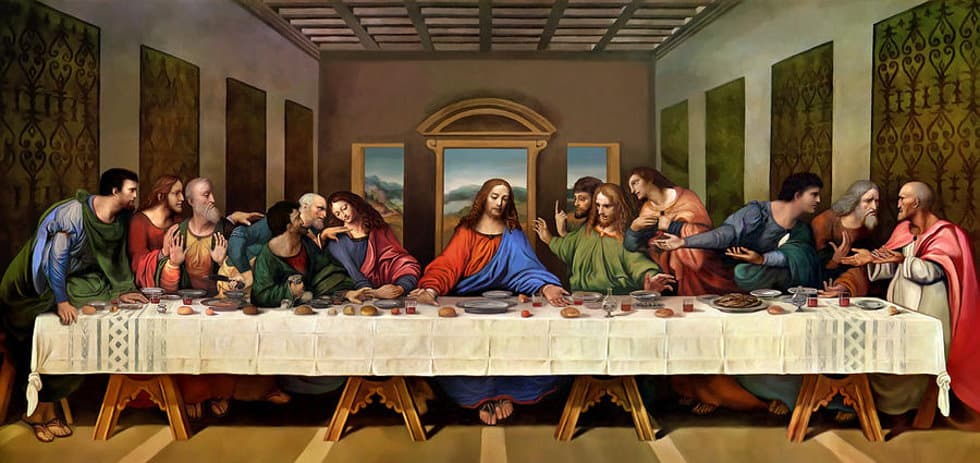
The other Lindsey last night looked at a picture of the Last Supper on the wall downstairs (take a look when you go down to fellowship today). She said, 'That is what I think of when I think of Jesus talking about friendship.' Then pastor said, 'Exactly, because that's when he said this!' [It was] when he gave communion. When you go up to communion today it's us still eating with Jesus. It's between friends. It's him looking after us, it's us being tied to one another. It's "love one another as I have loved you." Amen.
Image result for da vinci last supper
The picture referred to was Da Vinci's Last Supper painting

Friday, April 20, 2018

Lost Sermon on 1 John 3:1-2

We were snowed out last week and I didn't get to preach a sermon I really liked. So I decided today to write it down. Best I can. My sermons are developed and delivered orally and whenever I write them they never quite come out the same. Even when I try to type like I speak. But as I wrote it I got to add a bit I didn't have before, and I got to tweak it some. But nevertheless, here is a written version of what I was going to preach last week.

However different it appears, the fundamental point that [SPOILER ALERT] God makes us his children - both in a forensic and effectual sense - is still preserved.


Image result for we are god's children1 John 3:1-2
1 See what love the Father has given us, that we should be called children of God; and that is what we are. The reason the world does not know us is that it did not know him. 2 Beloved, we are God's children now; what we will be has not yet been revealed. What we do know is this: when he is revealed, we will be like him, for we will see him as he is. 
God’s grace makes us his children. God’s love makes us his children. God makes us his children! That’s the good news to hear today. If you miss everything else I say don’t miss this: you are God’s child. But don’t miss the rest, because the good news is not just that we are God’s children it is how we are God’s children. And in these two verses from first John we get a taste of how God makes us his children.
First, he declares we are his children. By the grace of his love, he declares it to be an indisputable fact. He says, “See what love the Father has given us, that we should be called children of God; and that is what we are.” THAT IS WHAT WE ARE! Not how he will treat us as, not what we could become, but what we are. Against all the evidence to the contrary, “But I’m human not a god” “But I’m a sinner, not righteous” “But my friend who I hurt called me a hypocrite not a saint” “But that neighbor lady says I’m not in the right church or did not have a true conversion experience” against all these things that say “But I’m not even good at this Christian thing much less God’s child thing” – against all that God’s word speaks. And if there is one thing we can trust over our own life it is God’s word. If there is one judgement that matters more than any other on the matter it is God’s. And God says in the word we are his children!
Sometimes – no, all times – we need to hear that. We need to hear a word that can speak over the struggles, doubts, sins, and even good in our life. We need a word that says over all those background sounds of this reality “You are mine” a word that completely takes us into the arms of God. It makes me think of the movie Man of Steel (a Superman movie for those unfamiliar). In a flashback scene young Superman aka young Clark Kent is wondering why he’s so different and his father Jonathan Kent leads him into the barn where beneath the floor he reveals to him the space ship that brought Clark to earth. As he reveals this to him, explains why he’s special and how he’s literally the answer to whether we are alone in the universe, Clark under the weight of it all looks up at Jonathan and desperately asks, “Can’t I just keep pretending to be your son?” and in one of his finest acting moments Kevin Costner – who plays Jonathan Kent – grabs ahold of the boy and pulls him close into his embrace and says passionately “You are my son.” Discipleship makes us different too. It calls for a different way of life in this world. And it is precisely when the overwhelming nature of that calling becomes apparent that we need the word to speak over everything else and just make us into God’s children.
The word does that when it says, “See what love the Father has given us that we should be called children of God; and that is what we are.” This same Word took flesh in Jesus who spread out his arms in love on the cross and from there God embraces you as his child. The word says it, Christ did it, so it is. I said at the beginning if you get nothing else hear this: You are God’s child. And I stressed that in part because hearing what God makes us is precisely the way he makes us his children! We hear it, and by the Spirit’s grace we believe it. But I also stress it because not everyone has ever heard that truly applied to themselves.
This is one reason why when you come up for communion, sometimes I will address you as a child of God. “Child of God,” I’ll say, “the body of Christ given for you.” I love to do that especially when I see visitors because you wouldn’t believe the expression on people’s faces the first time they hear someone call them a child of God. They get this look on their face that says “Yous talkin to me? Well you ain’t handin that piece a bread to someone else so yous must be talkin to me.” The look is sometimes quite emotional or stunned. I don’t always say it there, since after all the key word when I’m giving you communion is “the body of Christ given for you” but sometimes it’s good to put them together. After all, it is the body and blood of Christ, it is the grace and love of God, it is the new covenant that declares us God’s child – even all the way back to our baptism.
But that’s not the only way God makes us his child. God’s love and grace also make it not only in what the cross declares but what the cross affects in us. See, if God’s word really makes you family, then being part of the family makes us into who we are. In this case, it makes us more and more like Christ our great brother. It is as Paul who says we are being transformed according to the image of his Son. When I was a boy at my home church there were these three brothers. The oldest was 16 or 17 – something like that – then the next was like 6, and then the last was like 2. I couldn’t tell at the time but now, years later, things like Facebook have allowed me to see these two younger brothers as they grew up and you know what? They look just like their oldest brother! I would not have guessed all those years ago just how much alike they would be.
The author of first John writes “Beloved, we are God's children now; what we will be has not yet been revealed. What we do know is this: when he is revealed, we will be like him, for we will see him as he is.” We can’t simply look at ourselves and always see Christ within us, but as God’s children we are made into Christ’s body. His righteousness fills and pours out of us. Thus, the word says, “We don’t know exactly what we will look like, but it will look like him.” That promise is as much for the renewal of our minds and hearts and life as it is for the renewal of our bodies in the resurrection. The author knows this when he speaks later of how we know love because Christ died for us (3:16) and we love because God first loved us (4:19). When Paul said we would be transformed it would come by the renewal of our minds (Romans 12:2). That is, we also become God’s children when by the grace that makes us children it makes our lives like his Son Jesus. “So” Paul says in Galatians (2:20), “it is no longer I but Christ who lives in me. And the life I now live in the flesh I live by faith in the Son of God, who loved me and gave himself for me.”
And the truth is, though this example is not perfect, we can see how people resemble their family in habits and life style just as much as we can see when siblings physically resemble one another. Families impact the way we live. It’s why stable homes make such a difference in a child’s life. It’s why many premarital counseling programs ask about your family history – because we become what we are! When I first met my in-laws I did not see much of a resemblance in my wife. But as time went on – especially after a two-week period where I stayed alone with my in-laws – I began to see all these little things about her in them: from her voice in a crowded room, to the way she says certain words, to the way she watches movies. Little things, one after another, began to become apparent that they came from her family.
When the word makes us God’s children, it makes us live as God’s children – because we become what we are. And yes, today you might not notice it. Perhaps nobody will today. Matthew 25 says that at the end you won’t even know all the ways this righteousness flowed through you. But “Beloved, we are God's children now; what we will be has not yet been revealed. What we do know is this: when he is revealed, we will be like him, for we will see him as he is.” As faith draws us closer to Christ, it will do this. For by faith we hold fast to what God does, and what he does is make us his children.
So believe it. Because God says it, Christ did it, and the promise is when it is all said and done it will be apparent in who we are revealed to be, because whatever that is, for people of faith it will ultimately be like Christ. How good it is to hear from the word not only that we are God’s children, but we will resemble our good brother Jesus. Amen.