Wednesday, September 30, 2020

2020 MLB Playoff Bracket

 Of all the tragedy that 2020 has been to baseball (I have not felt so disconnected from the game since I started following in 2000) the one thing that I am excited for is the new playoff bracket system. Expanded playoffs should be interesting. And I am more than thrilled that the wild-card round is a best-of-three series finally. So while I didn't even venture to make predictions at the start of this shortened season I will throw my bracket out there.

Disclaimer: I realize that the AL already has played a game, but I will try to not let that alter my predictions that preceded them.

Wild-Card Round:

NL:

Dodgers over Brewers: If the Brewers win, not only would this easily be the biggest upset of the postseason but also would probably cause a lot of fans and writers to decry the entire new postseason system, since the sub-.500 team with terrible offense beat the team that was on pace for 116 wins. That said, anything can happen in short series and people should not underestimate that no team is hungrier for an upset than the Brewers who lost a heartbreaker wild-card game due to a fielding mishap last year and the year before lost a grueling 7-game Championship Series against none other than the Dodgers. That said, there seems little magic in this Brewer team and the Dodgers are the best in the league. I'd love the upset, but I'm betting Dodgers.

San Diego over St. Louis: The Pads are for real this team, and assuming the Brewers get eliminated they will be the NL team I'd like to root for this year. St. Louis is a team I have always warned not to dismiss because they sneak up on you, but I'm going with the better overall team.

Miami over Chicago: Here's my first upset prediction. The Cubs have Darvish and Hendricks, but we all know that Darvish has had some postseason blow-ups before and the Cubs offense has been abysmal. Add to that the fact that the Marlins have never lost a playoff series and I will give them the upper hand in a tough series.

Atlanta over Cincinnati: The offense of Atlanta against the pitching of the Reds. Usually in the playoffs you bet on the pitching, but I'm gonna go the other way because this Atlanta offense is so good. They'd be in a better place with Hamels and Soroka, but I'm not buying the predictions that say those are losses too great to make up.

AL:

Blue Jays over Rays: Let's start the AL off with an upset. The Rays are certainly a tough team with a tough rotation. But this is the best time for the Jays to play them, in a best of three. Having Ryu gives them a legit shot at one upper hand pitching matchup and their offense is young and could be electric through the postseason. All it takes is a spark. The Rays are hot, and they are the best in the league but I'm waving my Maple leaf for this one.

Yankees over Indians: The Yankees have a formidable top of the rotation to go with a strong line-up and the expectation to succeed. That culture of winning will help them trounce a deeper Indians rotation. This one will come down to line-ups and bullpen and I'd bet on the Yanks for that one.

Houston over Minnesota: So far I have chosen the lesser ranked seed each time and I'm choosing it again. It seems strange given how strong the Twins are, but a 16 game post-season losing streak is hard to swallow. While everyone is wondering if the 'Stros can do it without cheating, they have been here before quite a bit lately and Dusty Baker is one of the best managers in the game today and desperate for that elusive World Series victory. The Twins are built like a deep postseason team and I'd love to see it, but I don't think I will.

Chicago over Oakland: And with that I predict the lower seed in every match-up. The White Sox are 14-0 against left handers in the regular season and faced stiffer competition than the A's. This series is a bit of a coin flip for me, but I'll give the edge to the Sox.

Division Series Round:

NL:

Dodgers over Padres: I want it to be the other way, and I think the Pads have a real chance in this series, but I'm taking the Dodgers, particularly in regards to their superior pitching. But I don't think it will be easy, and I'll be cheering for the Friars all the way. Expect this series to go to game 5.

Braves over Marlins: Now I expect the Marlins to suffer their first ever postseason series loss. The Braves are just too good of an offense. And in a weird 2020 season I'm betting on offense over pitching.

AL:

Yankees over Blue Jays: Well...I'm also betting on pitching. The Yankees are the better team. If the Jays do advance though it will take a strong game 1 pitching performance to shut down the Jays' momentum and energy. Luckily you have Gerrit Cole for that.

Houston over Chicago: I did mention that the Astros have run this circuit before, and they have made it clear that they are a tough playoff team - even without the cheating. Pitching will be a real question. But this team wants to prove they are talented without the back-room sign stealing cameras and banging trash cans. I think they want it more.

Championship Series:

NL:

Braves over Dodgers: I don't want the Dodgers to win it again. So maybe this is wishful thinking, but I believe the Braves' offense is the one thing that can outhit the Dodgers, even with their strong staff. That said, I could easily see the Dodgers running over this team too. But if there is someone in the NL who can pull the rug out from under this monster team its the Braves and this is when they meet. Let's defy the experts and predict a different NL pennant winner.

AL:

Yankees over 'Stros: They are the complete package, and they're just as hungry to beat the 'stros after two straight years of the opposite. 

World Series:

YANKEES over Braves: a rematch over twenty years in the making. I don't however think it's going to go differently this time. Perhaps now is the time to say it: if they had Hammels and Soroka, perhaps things would be different.

NL Darkhorse: Cincinnati. While the Dodgers have the talent to be named as a back-up for the NL Champion, calling them a "dark horse" seems silly. The Reds on the other hand is a team no one is expecting to go deep but has the rotation to do just that.

AL Darkhorse: Blue Jays. I picked them over the Rays for a reason. As I said this is the season I'm gonna bet on offense. If they can knock out the Rays and the Yanks all other teams should be on notice.

Wednesday, July 1, 2020

re: no online communion

The practice of online communion for worship has grown in our church. I wrote up a piece some months ago for this blog about the issue but determined it was too long to post (like 11 pages single spaced) on why I would not do online communion. Nothing has changed in that regard. Allow me to try to share more briefly why. Please know this is in no way meant to attack those who have discerned to do so. I have quite high regard for many of them and realize the pastoral concern in their desire. I merely seek to share why I will have no part in the practice and why I find it so concerning in our church. I feel we have an obligation to share such concerns in an amicable manner, especially when they concern important matters of our ministry. I offer everything in the bonds of peace.

  1. Distance does matter. While there is no biblical or theological mandate saying "the distance of the hearing of the word to the people must not exceed..." it does matter. We know that, for example, by the fact that the words of institution must accompany the elements and distribution and that they were to be done loudly and not whispered. The emphasis in this was on the people's hearing. But it reminds us that these things rightly go together. How then do we determine when they are separated? Why is the amplification of a sound system to the back of the church or the narthex/basement of a full gathering acceptable but not online? Well, I think the very fact that one creates controversy while the others didn't suggests there is something fundamentally different. Online communion is more akin to situations of tv communion or phone communion than simply situations of amplification, and those are something we never suggested as acceptable even with our sick or homebound members. And I think the defining characteristic is space. While sound systems help share the word in the space where the people have gathered (including through walls), these other forms transmit to some other space. In short, the controversy comes when we transgress the lines of the gathered space. Digital gathering lacks the physicality of space, and the sacraments are by their nature a very physical and spacial thing. That is, according to Luther, part of their importance.
  2. The Corinthian controversy. I cannot get over the fact that Paul in 1 Corinthians 11 chastises the people of Corinth for partaking in communion in a manner where some are eating everything and some come and get nothing. The problem with digital communion is it expects everyone to have the elements to participate. Even if I were to drop off elements at all my members' homes we regularly get attendance from other individuals, sometimes states away. In worship we welcome all baptized believers to the table and let them examine themselves if they wish to partake. And if they in faith desire it we make sure they have access to the sacrament. In this, we cannot truly welcome them all to the table because not everyone may have access because they lack the elements. And I cannot stand the idea of making people watch themselves being excluded from the Lord's Supper because their grocery list didn't meet the requirements.
  3. Who is presiding (and what does that mean in this context)? Presiding over the sacrament has typically meant presiding over the entire act of consecration and distribution. In this context, the pastor could only preside over the consecration (sort of, since the pastor is not by the elements) and someone from the home would preside over the distribution. In our tradition, the act of presiding in the absence of the pastor is limited. It is limited to trusted individuals, often with the support not only of the congregation but the synodical bishop. There is some form of a call even if only a temporary one. In the case of online communion, a multitude of individuals are tasked, elected from within the home with no input by the wider church (congregation, synod, or otherwise). While on paper it seems like little could go wrong if directed by the pastor (after all, pastors give directions to individuals and congregations regarding communion all the time), a lot actually could with little to no accountability or oversight. Here are two simple examples:

    Jane decides to commune her cats, since they sit in worship with her as she watches each week.

    Bill has no bread and wine, so he opts for Snickers and Coke as elements.

    Now some pastors may not consider these as serious as I do. And yet they go beyond the bounds of what we would (or should) do in the sacrament had it taken place in person. The first is kinda sweet, but yet the sacraments are by all biblical indications for people only. The second shows the limits of adiaphora in the sacrament. For while we have some wiggle room in regards to the elements (unleavened/leavened bread or wine/grape juice for example) I do not believe we have unfettered freedom in regards to the elements where any substitute will do. And while Bill was doing the best he could (because he did not want to be excluded for not having the elements - see issue 2) how does one later say that may not have been the sacrament? Faithfulness to the sacrament I think goes beyond intention (which in both scenarios are good ones). The presider has a responsibility to see everything done according to the gospel so that there be no reason to doubt the sacrament or fear it being used in a manner that could cause offense. Whose responsibility is that? If it is mine (which I think it is), I do not feel I could do it adequately.
  4. We reject individual communion. To do this, some individuals who worship alone will be asked to commune themselves. Private communion as personal devotion is expressly forbidden within the Lutheran Confessions. Additionally, we have not ever encouraged our homebound members previously to commune themselves. Even in historical circumstances of isolation from church/pastors the Lutheran church has not advocated for self-communing but instead to rely on other means of grace. This was the primary response of our greater church at the outset of the pandemic: lean into the grace of the Word and your baptism. While online worship is a different context than say the lone-communing devotion in the Reformation times, I'm not sure we can simply assume communion in isolation to be now acceptable. And we still ought ask this question: does communion require at least two people? Does the other person being "on the screen" count? Consider especially how we've been able to identify (and have done so for years) the shortcomings of presence and relationship through digital means. Communion is a preached act accompanied by physical sharing. Jesus takes the bread, breaks it, and gives it to them saying... I think we are lying if we cannot admit already the shortcomings of digital media in conveying the preaching, how much more the physical sharing?
  5. Home churches and worship from home are not the same. A common argument is that the church met in homes for years. Why are we now insisting it has to happen in our building (especially when most pastors try so hard to say the church is not the building)? The answer is that there is a fundamental difference from worshiping from home and a home as a church: a home church was a home used as a church for any christian who gathered there. It was considered a public assembly even in a private home. Consider even the word the New Testament uses for church - ekklesia. The word was used for when people left the privacy of their homes to gather in a public space for an assembly. Worshiping from home is still by and large worshiping from the privacy of your own home not opening your home up to worship. We aren't usually inviting people (except maybe family), it isn't a designated gathering for the ekklesia - the church. It is a place where we are tuning into where the gathering is centered (and note, that centering is not the pastor but the Word. The church for this function has ministers, not the minister making the church). Consider especially the many church services that are not two-way media like Zoom but one way medium like a Facebook Live video. Everyone can in a way gather with me where the Word is being shared, but not I with them. There is also then a shortcoming of what it means to gather. We can connect - even meaningfully - but that is not the same as gathering. The myriad of people who desire our in-person worship to resume so they can be with their brothers and sisters, the years of shut-ins who tell you watching on tv is not the same all attest to the fact that whatever form of gathering or church is happening when we tune in, there is something gravely lacking. The biblical ecclesiology is not (as it is often miscast) "you are the church" but "you all are the church". You individually are but a part of the church as Paul says "you (plural) are the body of Christ and individually members of it."
  6. Perhaps it's better to refrain from the sacrament than doubt it or cause others to. Paul was glad he only baptized a few people in Corinth. It's one of the strangest passages in scripture unless we consider why; namely, baptism (and who did the baptizing) was part of the lines of division in the church. It is bad enough and grievous enough that the sacraments are one of the most clear areas of division in the ecumenical church today. When I consider that in recent years some of the greatest area of controversy in our denomination revolves around the Sacrament of the Altar I don't think it is good that we are adopting so quickly a new and highly debated practice. While our church embraces a lot of diversity in practice (even around the sacrament) our high view of the sacrament (right administration is one of the marks of the church) makes the wide embrace of any diverse practice essential in order for it to be embraced by the church. Splintered practice (which is different from diverse practice) sows the seeds of doubt for the community of faith, which is antithetical to the purpose of the sacraments. While uniformity is not the necessary answer, greater agreement on what practices are still "according to the gospel" is.
  7. There are other innovative methods that cause less offense. I realize part of this change in stance for some is because we are looking at the long haul. When my parish first canceled in-person worship, we did so for two weeks, fully expecting to be back for Palm Sunday. Then we realized it would stretch past Easter (I wept, literally wept, over not having communion for Maundy Thursday), then through April, then May, and all of June and now most if not all of July. The long game is part of why some are starting to say, "It's one thing to go a few weeks without communion, but now we're talking months." Luther said in the Large Catechism a Christian should desire the sacrament often. But he also said it should be according to our opportunity as well. Just as congregations at times have had to endure longer periods without the sacrament because the lack of a pastor kept them from the opportunity, so we should acknowledge that the age of Covid may limit our opportunities too. We should not be burdened by our inability to receive it. Communion is for us, not us for communion. Christ did not give it to be a burden. But also, as we pastors see the need (for Luther says we should receive according to need and opportunity) we may start trying to find ways to commune our brethren. But I would note that in our synod alone a myriad of means of communion have been experimented that far as I can tell carry far less controversy and concern as digital communion. This eliminates the right of necessity. Just as the church has not in extreme times in its past allowed private, personal communion out of necessity, so I do not see how we can claim necessity for digital communion when other means are available to us that would by their less offense be of greater value to the whole church. 
  8. We don't make communion. It is not our good pastoral intentions, nor our "magic hands" of the ordained, nor the deep faith of those partaking that makes communion what it is. It is Christ alone who can make communion what it is. Theology of the cross says we must lay aside our glory searching and test everything according to Christ and his cross that empties us of all spiritual innovation. This is why faithful administration is a big deal. It's not about some new form of legalism (which it can become). It must be about the only way we can trust in the sacrament is by trusting in God. And the best way to do that is faithfulness to the institution that promises us communion with Christ. That's why these things are so important to me. I do not doubt the wisdom, passion, love, or faith of those who suggest or partake in online communion. I do not doubt that people who have practiced it have found it to be meaningful. But our meaning is not what makes it what it is. No doubt those who practice online communion are leaning on this theology and the sufficiency of Christ's word wherever it is shared, but it also means that concerns around this practice are not small ones or to be dismissed. And arguments of intention, or not so much caring because one thinks Christ can accommodate it or other claims that minimize the concern will not suffice for me. Nor will arguments of adiaphora or diverse practice as this reminds us of the limits of such arguments in regards to that which Christ has commanded the church to do. 
While these words will perhaps feel as an attack by some, I submit them in a spirit of collegiality and a mutual desire to seek the good of the whole church as we discern this issue. Any argument I challenge that have been made by specific people is not meant to be a challenge of that person but merely to engage the arguments I have come across as this issue rages in our church. Perhaps I am on the wrong side of this debate, perhaps I too will be persuaded. Every pastor committed to the truth of the Gospel and the authority of the Word must be open to the possibility of their own error. But I respectfully submit these brief points to the table of discussion. 

***Later Addition: This post is intended to show the shortcomings of online worship regarding Holy Communion, and is not a condemnation of the practice of online worship itself. A defense of such can be seen in my post on faith and fear.

Tuesday, May 12, 2020

HIV: The Choice of Safety or Secrecy

HIV Secret Files - Home | Facebook
I was in a conversation with fellow clergy today around the issue of re-opening. We realize that for most of our churches, we are still realistically some time away from being able to have in-person worship. As we discussed the myriad of dynamics at play here the conversation went to personal choice. Some of our members - indeed some of our pastors - are more vulnerable to serious even lethal outcomes from the Coronavirus. This led to how part of our future will also include personal choice. There will be a point where the government cannot blanket close so many institutions. That is a reality and in some ways a good one. We don't want to totally cripple our economy, close businesses for good, and leave people unemployed and impoverished (especially when so many are already in that boat). But when that happens it will leave the people whom safe-at-home most protected with a choice. And part of the message from those who want to re-open things are especially saying the choice should lie with the individual rather than be stripped from them by the government.

But the problem is there are all sorts of dynamics with that which don't make it as easy as saying it is just a choice. A person who chooses to stay home when the state allows them to go out will not qualify for the same benefits of economic security, making it harder to stay home. Some bosses, eager to get business flowing again, may not be so tolerant of those who choose to not come in or work from home, forcing a person to choose between their job and their life. These were some of the dynamics that ran through our conversation. But there is another one too that ran through mine, thanks to life in the AIDS community: some people will have to choose to either reveal things about themselves they don't want others knowing, or endanger themselves. 

Many people who are HIV+ have chosen to live in secrecy, not disclosing publically that diagnosis with others, sometimes even close family members. Even as someone who has been public since a young age about his status, I don't broadcast it as much as I once did, and I've had enough negative experiences to not blame a single person for wanting to avoid them entirely. Every time I tell someone I am afraid of experiencing another one, even though - God be praised - they are fewer and farther between. 

What this means is that as the world re-opens but the threat of Covid-19 continues, people with HIV (or other health conditions they don't want others to know about) will be asked to make a choice between safety and secrecy. 

Either you will rejoin the world to keep your secret, knowing that as an immuno-compromised person it may cost you your life or you stay home and become subject to the questions of why you are not going back to work, why you can't go to Bible study, what would make you think you need to keep distancing and isolating more than the rest. This is especially true for younger demographics since the statistics are otherwise so overwhelmingly in their favor in regards to the impact of Covid-19. Along with their peers who question why they don't share their "it's no big deal" attitude are elders who may look to them to essentially build up the herd immunity.

We might also note that some HIV+ people are also closeted members of the LGBT+ community, and the strong association many hold between HIV and homosexuality will no doubt raise questions that may put other secrets in jeopardy as well. Like Michael Scott unintentionally outing his accountant Oscar in The Office I shutter to think that we might do the same.

I have no solution to this dilemma, since as I said before we cannot remain closed forever. I merely bring it forward to raise awareness to something perhaps you haven't had to think about among the many things we are thinking about when it comes to re-opening our states. And to those who identify with this, whether directly or indirectly, so you know someone else is thinking about your worry and fear. May God truly be with you in whatever path you take.

The Mutant Registration Act | X Men Movies Canon Wiki | FandomAs an HIV+ person I always had an affinity for the X-Men. Many from outcast groups or groups that have experienced hate and prejudice do. I remember  where there was genuine fear over mutants in society and a desire to know who they were (the public felt they had a right to know who they were). The "Mutant Registration Act" was proposed. The secrecy that one held to themselves or their families - that they were a mutant - was threatened of being stripped away. For a lot of reasons that always resonated with me. And as this dilemma emerged in my head, the thoughts of that secrecy taken away again rises to the front of my mind. This time not in the form of government imposition, but, ironically enough, the opposite. When the government lifts its measures and we are more "free" to "choose", for some people the choice will be a different one. 

And a much more difficult one.

Friday, January 10, 2020

MLB: Steroids & Sign Stealing

Image result for sign stealing


My opinions regarding the steroid era of baseball are well laid out to regular readers of my blog. In short, I felt the writers who now shame and try to blackball anyone associated with steroids (whether proven or not) didn't seem to have as much a problem with it when it was happening. And I felt the league did little to nothing for too long allowing it to get out of hand. And in the era of suspicion there is a lot of finger pointing and difficulty in quantifying any advantage juiced players might have had, especially because it may have been such a league wide issue pitchers and hitters were both benefiting from it.

Now enter baseball's newest scandal: technological sign stealing.

Most notable is the fact that now two World Series winners - 2017 Houston Astros and the 2018 Boston Red Sox - have both been accused of inappropriately using cameras, sounds, and signals to steal signs. In both instances the grievance is said to have happened "during the regular season", but that doesn't do much to ease the reality that these were the WS winners those years. For one, it seems odd to utilize such an edge in the regular season but not post-season (unless of course there were greater league scrutiny in watching for such a thing during the post-season) and even if we grant the benefit of the doubt and only go as far as the reported scandals it begs the question of how many wins did the team get by sign stealing? In short, would they have been playoff bound to have a shot at a World Series in the first place?

Image result for astros sign stealingNow we should pause a moment and be clear, we are still only talking allegations (although at least for the Astros the reports are sounding more and more like there will be discipline shortly meaning those have been substantiated enough to merit such action in the league). But as the news broke that the Red Sox too may have done the same we find ourselves asking what can be done? Perhaps more alarming is the fact that the issue seems far more of a league wide issue. Jeff Jones reported that multiple players named Texas and Milwaukee as major sign stealers. The Yankees were accused of sign stealing with the YES network. They in turn accused their rivals. The Brewers have accused the Dodgers. We shouldn't forget several years ago the Blue Jays supposedly had a person in the bleachers who was a sign stealer for the team.

Then the players have gotten involved. Darvish suggested Yelich stole signs, Yelich blasted back he didn't need to with him. Davies said 90% of his former team (Brewers) wasn't interested in sign stealing at all and there was no elaborate system. Middlebrooks, speaking much more generally, said it's a league wide issue and even the 95 loss teams that no one is naming are using it.
Related image
In short: the issue is wide spread enough that it's getting to the point players of saying "everyone's doing it". And every team or hitter with a remarkable run of success is falling into suspicion. Indeed, it's hard to tell how much it is helping if it is as wide-spread as the accusations within the league make it seem.

Is this starting to sound familiar?

It sounds to me an awful lot like the PED scandal: wide-spread, hard to quantify, suspicion everywhere, some evidence found, and the top dogs especially the ones put under the eye of scrutiny. Of course though, I have to ask, if Alex Bregmann has a Hall of Fame worthy career, will the BWAA withhold it because his team was found sign stealing? My guess is no. The reason being the blame is thrusted more on the team. But of course, how then can you rely on his career numbers? Or his team's success (and his role in it)? Steroids in the locker-room, even gained by trainers didn't stop them from putting the blame in the players for wanting the competitive edge and not the teams that paid them to find it (and even lent their personnel towards the task). And how will you know for sure which members of the team used the sign stealing and which didn't (think again about Davies' comment, which hints that players are not all in agreement on the issue)? These problems highlight why the BWAA treatment of the steroid era is such a joke. But they also should tell us that we are entering the same mucky world and the game needs to again act.

Not only must there be some strong discipline meted out to the teams accused if they are found to be guilty (which to his credit Commissioner Manfred has hinted at there being), but the next collective bargaining agreement needs to address this issue and even come down with significant punishment to players involved so that they have a reason to not want the competitive edge.

As a fan of teams like the Brewers and Yankees and Astros, I don't like to see their names brought up in this. I don't want the success of my team tainted with actions that seem beneath the game. Sure sign stealing has always been around and in some way is permissible, but it doesn't feel clean or honest. And adding technology and cameras to do so just adds to it. It feels like having a secret microphone to listen in on the other team's huddles in football so you know the play and can anticipate it. Something intuitive tells us it should not be a mainstream part of the game. And however difficult it is to fix, something needs to be done now...

...before the 2019 Nationals are accused!

Thursday, September 12, 2019

I Found My Lost Sheep: Seeking an Older Child

Image result for lost sheepThis week as I listened the the Gospel reading for Sunday being read aloud, I was struck with a different kind of chord than I have been while listening to this in the past. Typically, when I hear these two parables (and the one that follows - popularly known as the Prodigal Son) I have always thought about it from the place of the lost sheep/coin/son, after all, the context and Jesus' commentary on the parable itself is about sinners repenting (and heaven's response) and being received by him. I've also considered what it says about repentance as an act of God (the shepherd who finds the sheep, the women who seeks until she has her coin, the father who runs out to his son). But this week I heard it differently, and differently because like Jesus, who is responding to people reacting to his welcome of sinners, I have heard it in response to the reaction I find so prevalent when people learn I have welcomed from the foster system a teenager into my home.

Now I should be clear the response is not the same. The Pharisees are contemptuous towards Jesus. Most people are more filled with pity or surprise for me when they learn about the change in our home this year.
"Wow! I don't know how you do it. I could never do that." is a typical reaction we get.
"How's it going? I mean, a teenager in general. But then one with baggage..."
Or before we had a child placed but were willing to take older children, "You know they have so many issues, right?"

Now to be clear, these are not malicious statements. They are from people who care for us. And with them have come phenomenal support for our family and with those fears has also come a lot of understanding and help with our adjustment. But the point I am making is this: while this is not the same as the Pharisees' attitude towards Jesus' reception of the sinners it came with the same social reality: just as the Pharisees had no intention of welcoming such people into their table fellowship, most people feel the same about children who have been placed in the foster system, especially older children. And as a result, there are a lot of Jesus' little lambs who are lost in this world, aging out with little to no social safety net in life.

When my wife and I first got into this program we had two thoughts: be open, and if possible keep sibling groups together. As a boy who was once removed from his home as a kid and had the fear of being separated from his brother if we left our relative placement I wanted to prevent other kids from having to go through that. We were licensed to take up to three kids and we were looking to get a sibling group. But as we waited longer we noticed something: the kids who languished most without a home were often older individuals. Some had siblings who were already placed and sometimes already adopted elsewhere, but the large amount of older kids waiting for a forever family and rapidly running out of time was overwhelming. Soon our conversations went more towards whether this was where God was leading us.

Why is this? Why do older kids not get adopted nearly as frequently as younger kids? Well, for one they are assumed to be more behaviorally challenged (after all, it's a teenager too!). Additionally, as people would mention to us when we were considering older kids that's not a whole lot of time to have them. Of course, our response is that these kids need a family for life, not just for high school. They need a place to go for thanksgiving and someone to call when their heart gets broken or their car breaks down. Lastly, it is the greater realization that you have more life experience you are pushing up against. A 14 year old has 14 years of habits and experiences before you came into their life. That's more opportunity for clashes of values, styles, vocabularies, or even tv shows. That's more adjustment. Couple all that with the fact that many people who enter into this are doing so envisioning getting a baby/toddler.

But as I heard the parable of the Lost Sheep, all I could think about was the little lamb in my home and amidst all the struggles (don't just wear rose color glasses, this is challenging parenting) and all the concern people have all I wanted in that moment was to say "Rejoice with me, for I found my lost sheep." Because my kid is home. And my kid is precious to me, and - as this parable reminds me - to God. The parable by shaping the sinners as lost sheep reshapes the way we see them. The way we see past the label to their needs and God's means to addressing them in Jesus. And I know kids in "the system" need that same reshaping. And what might help that is what I am captivated by most - the joy of the shepherd as a mark for the joy of heaven. It's the joy of Jesus to get to eat with those sinners that day. It's the joy my wife and I had the day we were told our kid would be moving in. It's the joy that looks past everything else and just says "Rejoice with me."

And it has meant a lot when people have. Whether it has been family, friends, or my church it has meant a lot to have people rejoice with me. While I appreciate the concern people have for us (and have needed the accompanying patience/support), what I also need and love so much is that rejoicing. I don't want there to be an expectation for my child to fail or to foster the stereotype that older kids in the system are bad kids. They are hurting kids, sometimes with behaviors that to us at first glace don't match the hurt but they are deeply connected. They need people to welcome or eat with them. Just as sinners need Jesus to welcome them and eat with them. And it is the church's mission as the body of Christ to capture this, to preach this, and embody this incarnationally. Because the Father is rejoicing, and one thing I can relate with that, is that God wants us to rejoice with him.

Thank you to those who continue to rejoice with us, support us, and open up their hearts to my kid.

Thank you to those who do the same in the church for any lost sinner the Lord carries home.

Want to learn more about foster care and adoption? Click here.

Thursday, June 6, 2019

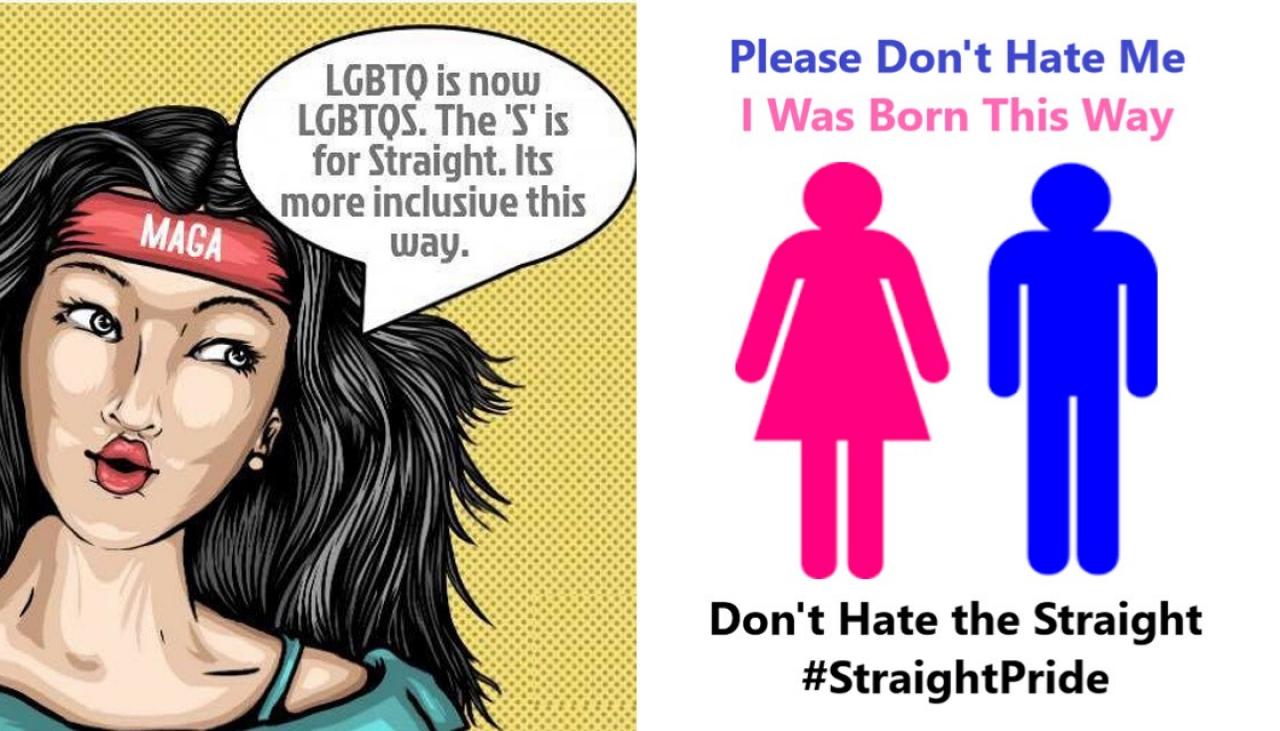
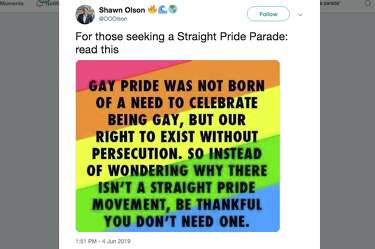
Why Straight Pride Isn't a Thing

As this month many people celebrate LGBT+ Pride month you occasionally get the question of why "they" get one and "we" don't. "Where is our straight pride parade?" you see written upon Facebook. Now I get the sentiment, I really do. I'm a straight, white, male. We don't get parades or months. History will tell we've gotten pretty much everything else of course, but I get why sometimes you feel like being you is not getting celebrated. It's an odd feeling of being...left out.
Image result for straight pride
I remember years ago my adopted father getting a phone message from someone from church asking why our church was celebrating Black History Month in February and where is our German History Month and after hearing the message he said in frustration to the answering machine "Because we didn't enslave, segregate, or undermine the history of the Germans!"

And the same goes for us who are straight. 

As I think about this, one image pops in my head: AIDS Walk Wisconsin. For years I used to do the AIDS Walk Wisconsin in Milwaukee. And one of the things I still remember was the lineup of protesters. As we walked in solidarity, as we walked in awareness, as we walked in the memory of those we lost, as we walked in hope that one day there would be a cure we always had to pass the line of those protesting. Protesting our walk for these things. Protesting because in some way they were certain that AIDS was the righteous curse. Most were religious. Some may have been well meaning. Some may have done it in genuine, religious zeal and with genuine concern for us. Many did it in hate. You don't get to yell curses, damnation, and rude statements to ten-year-old girls walking and call it love of neighbor. 

Nor do you get to disown your kid and call it that.

Or beat up a couple walking out of a bar.

Or shoot up a night club.

Or utter anti-gay words.

Or withhold from someone the compassion you showed before they came out to you.

I remember the line of protesters. I remember the theologies that AIDS was just God's great curse upon homosexuality. I guess everyone else who got it was just a casualty of the Lord's crusade against the gays. I guess for some reason, the Lord decided, the time had finally come to do something about these people who have always been around. I guess God thought this sin was so much worse than the others that the wages of death was not enough. He needed to throw down his microscopic lightning bolts of wrath. 

I remember those signs. And I remember how hurtful they were, and I think about how in the end they were not directed at me, but at the gay people who walked with me and who I walked with at AIDS Walk Wisconsin. 

Image result for straight prideOne thing about Pride month (at least from my vantage) is it involves pride in those who have risked and often suffered to identify as LGBT+. We don't have a straight pride because we never needed to take the big step and come out as straight, or worry what people will think if we tell them we're straight. We have not been discussed (often tactlessly) in politics, religion, and family meals as issues more than people. I've never heard of someone committing suicide because they couldn't handle being straight. We have not risked, suffered, or been afraid. We don't need pride to help our self-esteem, find solidarity, or try to tell the world we're here, we're ok, and we're people too. We haven't had people angry at the thought of us getting the same civil benefits such as being under the same insurance as our partners, getting tax breaks, or being able to make medical decisions for our partners were something to happen to them. We don't have stories like too many of my LGBT+ loved ones do. We haven't had to endure signs and protesters spewing hateful words.

I realize many people - especially of certain religious backgrounds - have a hard time with this, I too have struggled mightily over what to make of those passages in the bible about same-gendered sexual relationships. I am well aware of them and have not ignored what they say. But I also cannot ignore those passages that desire justice and fair treatment. I can't skip the part about treating others as I would like to be treated, nor can I miss the countless passages that have judged me unworthy. Therefore, whatever theological struggles I still have I have not struggled with this: no one deserves to be so ill-treated, so degraded, or so denied as many LGBT+ folks have. It doesn't matter if you are opposed to it morally, or think it's a choice, or an abomination; a little obedience to Jesus (or if Christianity ain't your thing, just try a little empathy) should tell us that no person - much less community of persons - should undergo all that my brothers and sisters have.

I can't pretend I don't know and love and have been loved deeply by people who are gay or lesbians or transgender. I can't withhold a hug to them or want them to be in psychological turmoil. And I'm thrilled in the ways pride has helped them.

Everyone should know they are loved. Loved by God. Loved by family. Loved by others. Loved by their enemies even. If you think the whole movement is an enemy to you or God, love them anyway. After all, God demonstrated his love for us in this: while we were still sinners, Christ died for us. 

So if it really is that hard to endure gay people holding hands in public or flashing a rainbow over their profile pic, suffer it a little. And don't demand your own month/parade/flag/whatever because of it. Rather rejoice that people - people we know and love - can feel safe enough to show their pride. Support those who have suffered for their pride. Understand why they get one and we don't. Don't contribute to the story of LGBT+ plight. That should be reason enough. We who are straight haven't faced the struggle. We don't understand therefore what it means to them. And it just seems petty when I see people complain about it or whine like a playground child "I want one too." Hope you never need one.

Maybe this changes nothing for anyone. But I'm not sure that means it didn't need saying. 

Always remember, goodness is stronger than evil. I know it.

To my LGBT+ friends. Happy Pride Month.

Image result for pride


Wednesday, May 22, 2019

Ministers should be seen (and heard)

Image result for coffee shop bible study


This is a case for public ministry. There are lots of cases out there (feel free to share one in the comments), and in some cases what happened in my story may never happen. But this is a case for public ministry. And by "public ministry" in this post I mean for the minister to conduct work in public places; to be seen. I know there are other definitions for the term but here it is about how our work engages the wider community.

And the point is simple - ministry belongs in the wider community. It's good to be in the office sometimes too. It's good when churches are open, accessible, and when people come in looking for help someone is there to help them. But it's also good to be out. It feels safer in our office where we control the environment, but that is also quite a "come" mentality when Jesus gives us a "go" commission. We belong in our mission fields. More than that, it asks a lot of a person to come in some respects. It's not easy to ask for help or seek spiritual guidance. It's harder to have to travel somewhere because now the person has to make the full initiative. How easy is it to put off going to the doctor, the dentist, getting a therapist, or calling your parents for help? It's hard to make that extra step. But once we are with the doctor, dentist, therapist, parent, or pastor there is far less standing in our way of saying what is wrong.

Public ministry enables us to be accessible to people who may for a variety of reasons be in need of spiritual support. By going out into the public sphere, we are already engaging the world. This is especially true when we are in some manner identifiable as pastors. It may be a clerical collar, it may be the bible you carry around everywhere, it may be that you meet for a religious purpose in a public square (like Bible study at the coffee shop), it may be that you are in a small town and everybody knows you are a pastor. Whatever the reason, when people know we are spiritual leaders and they are in spiritual need, public presence helps create the opportunity for them to be brave enough to seek spiritual help.

Here is a story I offer as an example. I'm part of a gathering of pastors that regularly takes place in a restaurant. We meet, eat, study the Bible, discuss theology, engage with community leaders and more. The group is a wonderful expression of ecumenical unity and has allowed for various means of cross-denominational fruitful ministry outcomes. It helps various communities of faith know what else is going on/troubling other communities of faith. It also keeps all of us pastors in the public sphere, especially with the staff who wait on us each week.

This Sunday our reading from Acts includes the story of the spread of the church to Macedonia with the start of the church in Phillipi. They journey there in part following a dream where a Macedonian cried out for them. The last two weeks our readings from Acts included Peter happening to be near Joppa when Tabitha dies allowing him to come quickly to help her and Peter telling how his time in Joppa led him to a new group of people who were not currently counted among the church - the Gentiles and the home of Cornelius. The early church did much of its mission by happening to be somewhere or going to places where people are hurting and crying out. The church today must also be seen, it's ministers also need to be available to those crying out.

On one occasion, one of those staff members at that restaurant lost someone in her personal life. I learned this because she happened to ask me to keep her family in prayer, which led to us talking a bit about what was going on that needed prayer. It turned out the individual who passed away was actually someone we had on our prayer list for several weeks in our church. It was a moment where the people we pray for (even when we do not know them but pray for them at the request of a member) intersects with the lives we know in our wider world. It reminds us why those prayers matter. And in that moment I was not a customer, I was a pastor. So I offered to do more than keep her family in prayer, I offered to do so with her there in that restaurant. We waited for a moment where there would be no work distractions, and we took a brief time of prayer together.

Had I not been there, perhaps she would have made her way into mine or another pastor's office seeking prayer. Perhaps not. What I do know is she knew she had someone who would pray and she asked for prayer. If you ever wonder why I or other pastors spend time out and about or what we accomplish I wanted to share with you one brief tale about how we make a difference by being in our community. It didn't grow my church nor do I expect that it totally changed her life. The moment itself didn't even last long. It wasn't why I was there in the first place. But it happened, and such happenings are holy in that they set something and some time apart to turn to the God who was already there.

We can share good news in the community by more means than going door to door asking if you've heard about Jesus, or holding signs and yelling into microphones in protest. Those forms generally don't turn hearts anyways. But rather, when simply by doing our religious business in proximity to people who need it, we give room for the Spirit to work. I should be clear, this can easily go beyond pastors too. Such public ministry can happen in an office between two co-workers. My point is that I and other pastors spend time being seen, and known, and trusted in part so that when crisis, guilt, questions, or just plain ol' opportunity arises in the lives of people around us, they know the church is there for them. They don't need to drive to its office and come in, but could run into its ministry in their everyday, hungry spiritual lives. The truth is, this is how God is; not just boxed into our beautiful temples but walking through the city streets and country fields. We don't come to God, God comes to us. Heck, God went so far as to take on flesh and live among us. That's why we got so many of these temples built all over the world! Because all over the world people find God, and as in ancient times build an altar to this God for others to see and for us to worship and remember the one who came to us.


I work in the public because this ministry belongs to the public. Many don't want it there for a variety of reasons but it belongs there. The earth is the Lord's and all therein. This is just one case for doing so. As a pastor it is one of those moments that remind me why I was willing to answer God's call into this gig in the first place. I love God's people. I love how much God loves God's people. I want God's people to know, believe, feel, and experience the love God has for them. It brought me many miles from my home to a new town, a new church, where I have an office I did not have before. And it brings me every week out of that office as well so that I can find myself before more people. And each time, whatever else I'm doing, I'm waiting.

And sometimes - not always, but sometimes - that waiting proves its worth and I get to be a part of God's loving work in our sometimes cruel world.