So once again any claim that the so called "steroid era" is a thing of the past dwindles as a major story breaks in Miami linking more baseball players to steroid use. It comes as no surprise to this fan. It reminds me why trying to draw lines in the sand about who is in/out on awards, who should be rewarded/penalized because of the steroid era just is too blurry of a line to draw. And as a sport writer (I believe from Boston) put it in regards to this last year's Hall of Fame vote, all you may really be doing is rewarding those who were better at covering it up.
It is no secret from past blogs of mine that I don't think the BWAA should be trying to sort out the steroid problem, by voting against those they deem guilty, even those who are, since it just makes the whole thing a joke.
That said, what they see is that the suspension and testing system is not deterring players enough. And they want something more to be done. My problem is in part they are essentially imposing not only unequally (past eras of baseball have used things considered cheating today with no consequences to HoF, past eras have used steroids with no reprimand), but also under suspicion, and with no real say/rights of the players. The player has no voice in the BWAA. Take Ryan Braun, who has a voice/chance to appeal in the MLB system. That gets his ruling overturned. But it does not matter in the BWAA's court. He has no say there. The other issue is the players not only have no voice in their defense against suspicions, accusations, or whatever else, but they have no say in the system. The MLBPA has a place in the drug testing system, approved it, they have a rep on the appeal for drug tests. They have rights. They have voice. They are part of the process. They agree to it and willingly take part in it. This is where further discipline or new means to curbing drug use must come from. Not from as I regularly call it BWAA vigilante justice...but from inside the game.
Perhaps there is a new place for this too. The idea comes from what the Yankees are reportedly trying to do now to Alex Rodriguez. Basically, now that ARod has been associated with ARoids again, the Yankees are trying to use that to void his contract, trying to find some kind of breach in the language to not have to pay the other $114 million they owe him. Now I should be clear up front: what the Yankees are doing here is wrong. What I particularly do not like is it really has nothing to do with steroids, they simply made a mistake by signing ARod to this crazy long contract for crazy lots of dollars and now they don't want to pay for it, as they have watched his skills and health deteriorate rapidly these last few years. I don't think it will work what they are doing, I don't think the MLBPA will let it happen. I believe ARod already missed out on a lot of money owed to him when the Rangers were allowed to declare bankruptcy and did not have to cover some money on his contract that was to be deferred. I don't think MLBPA would stand for MLB robbing him again, particularly because we all know that steroids really has nothing to do with why the Yankees want to void the contract.
The other reason is there is neither precedence or agreement on this kind of "punishment" for revealed/alleged steroid use. However, perhaps there should be. I don't think it should be imposed ex post facto on players, like trying to suspend a player today for steroid use in 1999 before the suspension for drug use system was in place. I think it needs to be something agreed upon, either MLB wide with the MLBPA or between teams and players when they sign free agent deals. If you want your guaranteed money and guaranteed years, you play clean. If you are suspended, the team can without penalty void the rest of the contract and grant your outright release. Like the current suspension system it won't stop the problem, but may curb it, particularly among the game's biggest names - which is currently where it is most embarrassing to the sport. But ask yourself, if Alex Rodriguez did in fact juice, would he if his $114 million were on the line? If his contract stated the team then can also impose drug tests (not just the random MLB ones) whenever it has suspicion, and the consequences meant more than some missed games, and two months' salary, but instead could mean your entire deal, would you do it? Now this does not mean the team has to release the player, they may decide to eat the bad press, they may think the performance was not linked to steroids (after all, there is a rather large school of thought that argues steroids have little real impact on most players' performance), whatever the reason the team may want to keep that player. But if using gives the team the option to back out, it will especially keep big name players or struggling players from trying to juice to stay/approach the star level of the game.
Also, this would be something either in accord with the current drug system (thus the decision based on successful/unsuccessful appeal) or could be appealed legally. In some way the player would have a chance to fight the ruling because again, voice and a part matters. But the player will also have a voice by either the entire MLBPA signing on similar to how they did with the previous testing system, or by it being a player-team agreement on free agent contracts, in which case the player himself individually signs and agrees to this system. Call me western democratic type, but I think having a voice in this matters.
But I think it would work, that is, help the game. I think Ryan Brauns and Alex Rodriguezes of the world would have a lot more to lose. I think it would help the teams get their own houses in order here. It would give a nasty consequence.
If Alex Rodriguez had his contract voided today, what would he sign for? Maybe a 1-2 year deal, 5-10 million?
Maybe the one problem with this is good players could still get good deals (but as Melky Cabrera showed this year, they won't get nearly as big or nearly as long, and guaranteed years is a big thing in the sports industry). Teams would also probably be hesitant to test/release their stars (but maybe more eager to test aging players on the end of large contracts). But the added risk gives players perhaps 100 million reasons to not juice. Those with lots of money, or aging and with a limited market left, getting paid now far more than they are worth will not try to live up to their contract or return from injury faster by taking shortcuts.
Then maybe the stars and future hall of famers won't show up on other reports of steroid use or other positive tests. Oh wait, they won't be future hall of famers either. Man I hate the BWAA...
Wednesday, January 30, 2013

Tuesday, January 29, 2013
Rejecting Jesus in our Hometown
It's been a busy month for me, I accepted a call to two churches and have been preparing for the whole transition. Packing makes for little blogging. But I really did want to get a Sunday reflection in. So time to reflect on the upcoming text.
This Sunday will be continuing from last Sunday's reading on Christ's trip to synagogue in his hometown of Nazareth. The text comes from Luke 4:
21 Then he began to say to them, "Today this scripture has been fulfilled in your hearing." 22 All spoke well of him and were amazed at the gracious words that came from his mouth. They said, "Is not this Joseph's son?" 23 He said to them, "Doubtless you will quote to me this proverb, "Doctor, cure yourself!' And you will say, "Do here also in your hometown the things that we have heard you did at Capernaum.' "24 And he said, "Truly I tell you, no prophet is accepted in the prophet's hometown. 25 But the truth is, there were many widows in Israel in the time of Elijah, when the heaven was shut up three years and six months, and there was a severe famine over all the land; 26 yet Elijah was sent to none of them except to a widow at Zarephath in Sidon. 27 There were also many lepers in Israel in the time of the prophet Elisha, and none of them was cleansed except Naaman the Syrian." 28 When they heard this, all in the synagogue were filled with rage. 29 They got up, drove him out of the town, and led him to the brow of the hill on which their town was built, so that they might hurl him off the cliff. 30 But he passed through the midst of them and went on his way.
For all those preachers who have had angered parishioners over your sermon, just remember that Christ preached a sermon that made his next door neighbors want to chuck him off the cliff! Maybe a few complaints, critiques, or even hard hearts ain't as bad as we some times feel when we encounter it.
 What seems so interesting about this text is that it is not some unbearable law that Christ is speaking. We could imagine the reaction were it some unwanted message. Like Savonius' pietistic outcries in Hammer of God which enraged those he particularly targeted with his preaching, we could maybe make sense of this if Christ were pointing fingers. But this is no series of woes sermon like in another part of the Gospel. There is no mention of broods of vipers or hypocrites. Instead, as we heard this last week, Jesus tells the people that Isaiah's prophecy of good news, captives set free, has been fulfilled. This is what started it all. However amazed they were, they couldn't imagine little Jesus from around the corner as the fulfillment. While in John's gospel Nathaniel from outside of Nazareth asks "what good could come from Nazareth?" (John 1.46) perhaps the folks from Nazareth were saying the same thing. Luke and Matthew both impress the fact that Jesus was born in Bethlehem, Matthew says the scribes all told Herod that was where the Messiah was to come from (Matthew 2.4-5), and the inclusion in the Gospels likely also meant others expected this too, so much so that it was important to tell how a man called Jesus of Nazareth could have come out of Bethlehem. Maybe those people in Nazareth too simply could not then imagine how the Messiah could come from their town.
Maybe it was because he was so ordinary. The fullness of Christ's humanity is obvious here, in that those who grew up with him (or watched him grow up) could see nothing more than a mere man. They did not even see him as a prophet of God. Those who quest for the "historical Jesus" or see him as nothing more than a great teacher, but seek to remove the supernatural, miraculous, and salvific from the portrayal of who this Jesus "really was" - even they to some extent saw him as a prophet of justice or radical rabbi that led to a political death. But yet the people who saw him grow up could not perceive him as even a prophet, much less liberator. Here we can see how human Christ was, so human they could not see him as special enough to possibly have done that which he said the Spirit of God anointed him to do.
But this is not merely about Christ's humanity apart from his deity. Perhaps what Luther was so keen on was understanding how in that which seemed so human of Christ (ultimately his death) was precisely where God was revealed. Here God's work is revealed in a place where no one expects or believes it, here God is in someone who everyone knew and yet no one seemed to know this about him or grasp or in the end believe what his work was about. The very fact that Christ was so ordinary, so human is in fact a revelation of the divine at work, it is the revelation that to the most obscure, ordinary, or more importantly, in the place you'd least expect it - that is where God not only appeared, but did his great work. Like Elijah at Mt. Horeb when God appears not in the fire or quaking but in the gentle wind/stillness/tiny voice - there was God. God can be found in the inglorious.
Yet as surely as the people in Nazareth we can forget that today. Especially when we groom ourselves to see God in the good or the glorious. I'm not saying God is not a source of our blessings, but I am saying that when we can only see God there we can miss him completely, because at times we will not see blessing in our life. When only grief, trouble, or even the mundane and ordinary is all we see - then we start trying to reach for some sort of blessing lest God be absent from our lives altogether. But the word of the cross does not find Jesus in mere blessing, rather in execution for the less than ordinary (crucifixion would never happen on an ordinary Roman citizen). The ordinary people at Nazareth can only see the ordinary Jesus, not the work of God there. Even though they had heard about the things Jesus had done in Galilee they could not see it when he showed up for church that Sabbath. We too week in week out can hear great things but not see it nor believe it when it is preached into our lives. This is especially true when our lives don't feel touched by God but rather forsaken by God. This is when we need the word of the cross - that when Christ takes the curse upon himself, it means no cursedness could mean forsakenness. Instead we know Christ is closer now than ever before, taking upon himself and giving of himself unto us.
The rejection at Nazareth is a difficult text for faith communities to wrestle with because we usually look and say that we see Christ for who he is. We didn't reject him (maybe even some of us go so far as to say we chose him), we praise him, we disagree with what those Nazarenes did. If you want any idea as to how apart we see ourselves from the people of Nazareth just look at our music. Trying to pick hymns for this Sunday that fit with the Gospel is insane. To find one that really hits home this week we are turning to a well known holy week hymn "Ah Holy Jesus" which includes such great lines as "by thine own rejected" and "twas I Lord Jesus, I it was denied thee, I crucified thee!" Most of our music will talk of Jesus dying for us but not acknowledge our part in his death, especially our rejection of Christ. We sing "Stand up, Stand up for Jesus" and "I Want to Walk as a Child of the Light". But this text should show how those who would think they know Jesus best can turn on him, reject him, and not see him. We should not put ourselves up against the people of Nazareth but ask ourselves when in our lives has Christ declared us free and we not believe it and in what places life seemed too ordinary or worse too cursed to believe God had done something amazing for us in Christ. When have we revolted against Christ in our hometown? When do we make a disconnect from the story of scripture, the words of worship, and our daily lives and faith?
If this text causes us to face that question, perhaps we can see the beauty of the Gospel of Christ in it as well. This story shows where rejection drives: To Christ's death. Ever ask or get asked why Jesus had to die? It's because we would have it no other way. It's not because God could not set the prisoners free without Christ's death. We see in this reading: it was fulfilled in their hearing: Christ could set the prisoners free. But what we also see is how prophet after prophet gets marginalized, abused, disbelieved, and even killed. When we don't think we need this message, don't want this message, or ultimately don't believe this message we reject it and the messenger. But in Christ, God took our rejection (the cross) and turned it on us, using our very act of rejecting the one who comes to set the prisoners free as the great act of freedom.
In the season of Epiphany Christ constantly is being revealed. It is nice that in the midst of these texts we are reminded how blind we can be to the revelation. How the one revealed as God's Son was revealed also to be so ordinarily human. It is good to know we need this revelation, and we need it regularly, because even when we know of the great things God has done, days come when we drive Christ out of our hearts, not knowing Who is working before us in this world. It is good that as we are frustrated over the disbelief of others, or the slowness or lapses of belief in ourselves, that we see how regular that struggle was, and hear that the rejection from the people God would turn into the redemption of the people. It is God's persistence not just in revealing himself, but in his work for us. It lets us know that Christ came to set the prisoners free, and would do anything even die to do so. It lets us honestly sing 'twas I Lord Jesus, I it was denied thee. I crucified thee!
And it lets us hear Christ on that cross in response 'Father forgive them, they know not what they are doing.' And know in hearing that, in the Easter resurrection, he set us free indeed.
This Sunday will be continuing from last Sunday's reading on Christ's trip to synagogue in his hometown of Nazareth. The text comes from Luke 4:
21 Then he began to say to them, "Today this scripture has been fulfilled in your hearing." 22 All spoke well of him and were amazed at the gracious words that came from his mouth. They said, "Is not this Joseph's son?" 23 He said to them, "Doubtless you will quote to me this proverb, "Doctor, cure yourself!' And you will say, "Do here also in your hometown the things that we have heard you did at Capernaum.' "24 And he said, "Truly I tell you, no prophet is accepted in the prophet's hometown. 25 But the truth is, there were many widows in Israel in the time of Elijah, when the heaven was shut up three years and six months, and there was a severe famine over all the land; 26 yet Elijah was sent to none of them except to a widow at Zarephath in Sidon. 27 There were also many lepers in Israel in the time of the prophet Elisha, and none of them was cleansed except Naaman the Syrian." 28 When they heard this, all in the synagogue were filled with rage. 29 They got up, drove him out of the town, and led him to the brow of the hill on which their town was built, so that they might hurl him off the cliff. 30 But he passed through the midst of them and went on his way.
For all those preachers who have had angered parishioners over your sermon, just remember that Christ preached a sermon that made his next door neighbors want to chuck him off the cliff! Maybe a few complaints, critiques, or even hard hearts ain't as bad as we some times feel when we encounter it.
Maybe it was because he was so ordinary. The fullness of Christ's humanity is obvious here, in that those who grew up with him (or watched him grow up) could see nothing more than a mere man. They did not even see him as a prophet of God. Those who quest for the "historical Jesus" or see him as nothing more than a great teacher, but seek to remove the supernatural, miraculous, and salvific from the portrayal of who this Jesus "really was" - even they to some extent saw him as a prophet of justice or radical rabbi that led to a political death. But yet the people who saw him grow up could not perceive him as even a prophet, much less liberator. Here we can see how human Christ was, so human they could not see him as special enough to possibly have done that which he said the Spirit of God anointed him to do.
But this is not merely about Christ's humanity apart from his deity. Perhaps what Luther was so keen on was understanding how in that which seemed so human of Christ (ultimately his death) was precisely where God was revealed. Here God's work is revealed in a place where no one expects or believes it, here God is in someone who everyone knew and yet no one seemed to know this about him or grasp or in the end believe what his work was about. The very fact that Christ was so ordinary, so human is in fact a revelation of the divine at work, it is the revelation that to the most obscure, ordinary, or more importantly, in the place you'd least expect it - that is where God not only appeared, but did his great work. Like Elijah at Mt. Horeb when God appears not in the fire or quaking but in the gentle wind/stillness/tiny voice - there was God. God can be found in the inglorious.
Yet as surely as the people in Nazareth we can forget that today. Especially when we groom ourselves to see God in the good or the glorious. I'm not saying God is not a source of our blessings, but I am saying that when we can only see God there we can miss him completely, because at times we will not see blessing in our life. When only grief, trouble, or even the mundane and ordinary is all we see - then we start trying to reach for some sort of blessing lest God be absent from our lives altogether. But the word of the cross does not find Jesus in mere blessing, rather in execution for the less than ordinary (crucifixion would never happen on an ordinary Roman citizen). The ordinary people at Nazareth can only see the ordinary Jesus, not the work of God there. Even though they had heard about the things Jesus had done in Galilee they could not see it when he showed up for church that Sabbath. We too week in week out can hear great things but not see it nor believe it when it is preached into our lives. This is especially true when our lives don't feel touched by God but rather forsaken by God. This is when we need the word of the cross - that when Christ takes the curse upon himself, it means no cursedness could mean forsakenness. Instead we know Christ is closer now than ever before, taking upon himself and giving of himself unto us.
The rejection at Nazareth is a difficult text for faith communities to wrestle with because we usually look and say that we see Christ for who he is. We didn't reject him (maybe even some of us go so far as to say we chose him), we praise him, we disagree with what those Nazarenes did. If you want any idea as to how apart we see ourselves from the people of Nazareth just look at our music. Trying to pick hymns for this Sunday that fit with the Gospel is insane. To find one that really hits home this week we are turning to a well known holy week hymn "Ah Holy Jesus" which includes such great lines as "by thine own rejected" and "twas I Lord Jesus, I it was denied thee, I crucified thee!" Most of our music will talk of Jesus dying for us but not acknowledge our part in his death, especially our rejection of Christ. We sing "Stand up, Stand up for Jesus" and "I Want to Walk as a Child of the Light". But this text should show how those who would think they know Jesus best can turn on him, reject him, and not see him. We should not put ourselves up against the people of Nazareth but ask ourselves when in our lives has Christ declared us free and we not believe it and in what places life seemed too ordinary or worse too cursed to believe God had done something amazing for us in Christ. When have we revolted against Christ in our hometown? When do we make a disconnect from the story of scripture, the words of worship, and our daily lives and faith?
If this text causes us to face that question, perhaps we can see the beauty of the Gospel of Christ in it as well. This story shows where rejection drives: To Christ's death. Ever ask or get asked why Jesus had to die? It's because we would have it no other way. It's not because God could not set the prisoners free without Christ's death. We see in this reading: it was fulfilled in their hearing: Christ could set the prisoners free. But what we also see is how prophet after prophet gets marginalized, abused, disbelieved, and even killed. When we don't think we need this message, don't want this message, or ultimately don't believe this message we reject it and the messenger. But in Christ, God took our rejection (the cross) and turned it on us, using our very act of rejecting the one who comes to set the prisoners free as the great act of freedom.
In the season of Epiphany Christ constantly is being revealed. It is nice that in the midst of these texts we are reminded how blind we can be to the revelation. How the one revealed as God's Son was revealed also to be so ordinarily human. It is good to know we need this revelation, and we need it regularly, because even when we know of the great things God has done, days come when we drive Christ out of our hearts, not knowing Who is working before us in this world. It is good that as we are frustrated over the disbelief of others, or the slowness or lapses of belief in ourselves, that we see how regular that struggle was, and hear that the rejection from the people God would turn into the redemption of the people. It is God's persistence not just in revealing himself, but in his work for us. It lets us know that Christ came to set the prisoners free, and would do anything even die to do so. It lets us honestly sing 'twas I Lord Jesus, I it was denied thee. I crucified thee!
And it lets us hear Christ on that cross in response 'Father forgive them, they know not what they are doing.' And know in hearing that, in the Easter resurrection, he set us free indeed.
Saturday, January 26, 2013
Reworking Draft Pick Compensation
This year was the new year under the draft pick compensation system reworking that happened with the new collective bargaining agreement. It basically eliminated the old type A type B system and mixed the two together and no longer became about performance per se.
Under the old system type B free agents if offered arbitration and sign elsewhere the player's previous team would receive a player in the compensation round (between round 1-2) of the draft. Type A free agents who were signed would mean the previous team will receive a compensatory pick like a type B, but would also receive one of the other team's draft picks. If you were one of the top 15 teams in the league you lost a first round pick, if you were one of the worst 15 teams in baseball you surrendered a second round pick. If you were the Yankees of the 2008-2009 offseason you sign three type A free agents and lose your first three draft picks. Yeah, the poor Blue Jays that year got a third rounder as compensation for losing AJ Burnett. Bummer. The other issue with the old system was teams would have "hand shake" agreements with their type B players who they were not going to resign that they would offer arbitration and the player would turn it down in order for the team to be guaranteed an extra draft pick with no risk to the player's market since he didn't cost the new team anything extra like a type A free agent would. These agreements didn't hurt anybody, but removed all the risk involved in a team when they offer a player arbitration. Part of the risk was supposed to be that the player could say yes. And it also besmirched the fact that the entire notion of draft pick compensation was to compensate teams who lost players they were trying to keep (but could not in a competitive market). Instead it was compensating teams who had no interest in retaining players, but simply had good relationships between player and general manager. Yet another problem which emerged in this system was that one really good season could rank you as a type A free agent (since the rankings were based on a system that only looked at your last two years before free agency). This was a real problem for otherwise mediocre players, or even worse relief pitchers. Aside from the elite closers, teams just were not really willing to surrender a draft pick (especially a first rounder) for a relief pitcher, since relievers are much harder to predict in performance and bullpens are easy to revamp cheaply. This led to relievers having no pitching market. The most notable example of this would be Juan Cruz, who received type A status, could not get a job, and his team and new team had to work a sign and trade whereas his original team signed him and traded him to the team that wanted him. These are issues the new system tried to eliminate.
Basically under the new system, if your team offers you enough money (what is known as a "qualifying offer") and you turn it down by a specific deadline, any team that signs you will lose a draft pick. The qualifying offer number changes from year to year, because it basically has to make the player one of the highest paid players for the year. This offseason a qualifying offer had to be about 13 million for the year. Players that turn down their qualifying offer now cost the other team like under the type A system but benefit the previous team like the type B system. Or close to it. That means teams with the first 10 picks (as opposed to first 15 in the old system) have their first round pick protected but must surrender a second rounder. Teams who have picks 11-30 will forfeit that draft pick if they sign a player who has received a qualifying offer. The team who made the qualifying offer however will no longer receive that pick in addition to a compensatory pick, instead they will only receive extra picks in the compensatory round.
The thinking behind this is now only players who teams are willing to retain for top dollar (in theory the top free agents/top talent) will receive qualifying offers. Since promising 13 million for the year would be quite tempting for mediocre talent to take. It also removes the type B concept where teams could receive compensation with no real commitment or effort to keep a player. There are no handshake agreements when losing a draft pick is attached to you. It will affect your market to some degree.
But there are some problems still. Part of it is the market, that is, players who may not be what we consider the top tier talent may be expected top tier contracts because of a thin market at their position. Kyle Lohse is an example of this. After two strong seasons, especially this year, coupled with a thin pitching market, he seemed poised for big money and multiple years. But who thinks Kyle Lohse is one of baseball's best pitchers? Who thinks he will replicate these last two years as he enters his mid-thirties? The market inflated his dollar value. This made the Cardinal's decision to give him a qualifying offer obvious. Other factors such as agents affect this, since some agents (most notably Scott Boras) don't usually settle for one year deals, especially at the start of an offseason when the deadline for the qualifying offer is made. These lead to players obviously declining offers, but teams wondering if the player with worth not just the cost of an inflated market (which the way money is pouring into the industry probably is not going to stop some teams) but the cost of a draft pick is a serious issue.
The new system also favors teams like the Yankees, big market teams who can absorb some risk and make an offer to a more fringe player, like Raphael Soriano, who in my view is hard to justify 13 million a year, especially when you have Mariano Rivera as your closer so you are paying him to set up. Knowing Soriano wanted to close, the Yankees could gamble on Soriano and make a qualifying offer. If he accepts, they can afford one year of Soriano at 13 million and have an excellent bullpen. Because compensation is tied to salary amount, bigger market teams can take more risks and offer it to players whereas there is no way a team like Tampa Bay could make a qualifying offer unless they were 100% certain the player would turn it down or they really wanted to keep the player. Basically the small market teams will have to either truly want the player or be certain. Large market teams are not necessarily committing to wanting the player, even though that is what this system is still supposed to be about. It simply means only the large market teams can betray the system.
Then of course there is the problem with the value of draft picks under the new system. This may be the biggest issue with the new system. Now you don't just have draft picks, you have a spending limit on those draft picks. This cap on draft picks is a total amount spent for the year, but it can be divided any way you'd like among players that you draft/sign. Your cap total in part depends on what number picks you have (so since a 12th overall pick should be getting a better signing bonus than a 30th overall pick, your total draft spending would be higher because you have a higher pick). This means losing a draft pick not only impacts how early and how often you draft, but how much you can spend on the players you draft. This changes the value of draft picks, because even if you could live without that draft pick, you might feel you need more money to be able to sign the picks you want.
With the current system, we are seeing several players who had essentially no market. No surprise Boras clients are among those left (meaning you are already gonna have to over pay for the player's services in years and money, much less in draft picks). Michael Bourn and Kyle Lohse, two of the better free agents this year, have had little to no market. For Bourn, part of it was that the teams (Phillies and Nationals) that might have been willing to give up a draft pick and spend a lot of money for him ended up getting their speedy center fielders courtesy of the Twins. But the lack of any real market afterwards is clearly in part because of draft pick compensation. This is to the point where the MLBPA is considering filing a grievance. And the Mets were rumored to be interested but not willing to give up their first round pick (number 11, the highest first rounder you can lose). Lohse also has seemed to have no interest. MLBtraderumors.com, one of my favorite sites this time of the year, which posts just about any rumor on players out there don't even have much traffic on him this year. Prior to Scott Boras pulling a rabbit out of his hat, the same seemed true with Raphael Soriano who just now signed with the Nationals, despite being perhaps the best reliever on the market.
So now the question is how do we rework this system? I have an idea, but then an opinion. Here is my idea: that the compensation system fluctuate. I don't think we should alter the rules around draft picks and caps. I definitely think the amount of money going to draft picks were crazy. You shouldn't have that much leverage in contract negotiations before playing a game of professional baseball. If costing a draft pick does not also affect your draft cap, it actually might be an incentive for some teams to sign players with draft compensation so they have more freedom in draft spending. I'm not sure that benefits the system. Then large market teams will again be able to not only sign the big names, but have the money to perhaps sign the best players who could then use signability as leverage to drop in the draft. However, we could fluctuate the draft cost based on the market. The idea would be that after January 20, a good cutoff time for when the top free agents should be signed, the compensation decreases by dropping a round. Under this system, if the Mets signed Bourn now, he would only cost the Mets' second round pick instead of their first round pick. This would not affect what the Braves receive, since under the new system their compensation would still be between rounds 1 and 2. It only impacts what the Mets give up. The idea is that players who lose their market entirely due to compensation may get a last minute revitalization in their market. The benefit of this system is that instead of year in year out trying to fix holes in the system or rework it so it doesn't impact this or that player the next year, this system self fixes. That is, it is designed to offer relief to those who are hurt by the system. It doesn't fix all the problems, most notably the issue of large market teams benefiting from this system. But it still fixes the main complaint most people have over compensation and that is how it affects the market of certain players. Whenever we find teams to think a player is not worth that cost , they will drop some in the compensation later in the game.
I don't think this would impact most compensation players. That is, the ones this new system was designed for. The Zach Greinkes and Josh Hamiltons of the world will still be signed in December because players that sought after teams don't care about the draft pick cost. They want that kind of talent. There is always a risk of teams waiting until after the deadline to bid, but I just don't see it happening with the elite players, and perhaps it should with the less elite. What it would do is especially open up the market of teams that rely on draft picks for their franchise to get a chance to go in on top free agents. But there is that risk.
That was my idea. This is my opinion: That the system not be redone. I think we ought to keep the system exactly the way it is. There are two reasons here: the first is that players are taking a risk when they turn down a qualifying offer and that risk should remain. If the new compensation system is meant to only compensate for players that teams really want to keep, then it also means the system should affect their market some and it should in fact make players consider staying with their team, not just because of the money, but because of how compensation will affect their market. When a team makes a qualifying offer, especially smaller market teams, they are taking a risk that the player will not accept (or they want him to), and therefore there should be equal risk involved for those players who turn down the offer. Furthermore, if a couple players each year suffer a horrible market because of draft pick compensation, it will make players more willing in the future to accept qualifying offers, which will make teams more discerning on who they offer it to. Do you think next year's Kyle Lohse will weigh whether teams value him as much as he does. And if next year's Kyle Lohse accepts the qualifying offer, maybe the following year teams won't make that year's Kyle Lohse the qualifying offer, and his market will be wide open. Only by letting this system play out with all of its risk can the concept of making and accepting/denying qualifying offers ever come closer to the philosophy behind the compensation system in the first place. There are ways we could revitalize the market for these players each year, but we shouldn't. Michael Bourn and Kyle Lohse should maybe have to take 1-2 year deals at far less than anyone predicted in order for teams to be willing to surrender a pick for them. That will impact all the decisions in who gets and who accepts offers in the future.
Another reason is that this can actually benefit smaller market teams too. As I advocated in a previous post when I urged the Pirates to sign Kyle Lohse, I think the way this impacts a player's market could give a chance for less attractive free agent destinations to lure free agents without having to do ridiculous overpays that have historically been the only way to attract better tier players from the top destinations. The Pirates, between record streak of losing seasons and not having the dough to buy free agents have never been major buyers on the market. But here they could be. When Kyle Lohse has no one willing to commit to him, a 3 yr/30 million dollar offer from Pittsburgh looks a lot better than it would were the Angels and Phillies and Yankees all involved too. By the system also limiting the market of better players, it gives the little guy a better chance to enter it.
I think we should also remember Raphael Soriano. As Scott Boras has proven year in and year out it only takes one team willing to pay the cost. A limited market may be unfortunate, but it does not also mean that a player cannot get a good contract, because they only need the one team to jump in. It is more boring, it removes player's leverage, but it does not remove the possibility of getting a great contract with a great team. Just like when teams need to at some point pay good money to get the players they want, that can happen too with draft picks. I will not be surprised if the Rangers losing out again on another top target (Justin Upton...which by the way I get props on suggesting that destination 24 hours before he went to Atlanta) I think the Rangers are going to be desperate enough to go for Lohse or Bourn, and because of their disappointing offseason I think Lohse and Bourn would still have some leverage in negotiations to get a good deal. The limited market not only opens options for teams less fortunate on the free agent front like the Pirates, but it also allows these teams that have missed out throughout the offseason to make a big move late.
Basically, the system is not a bad one. Say what we might about it. And we shouldn't just rework it now because Scott Boras clients remain unsigned, we should let the market play out which is the real way to make it better in the future, by letting there be real risk and real reward.
That and I don't want to have to learn a new system again.
Under the old system type B free agents if offered arbitration and sign elsewhere the player's previous team would receive a player in the compensation round (between round 1-2) of the draft. Type A free agents who were signed would mean the previous team will receive a compensatory pick like a type B, but would also receive one of the other team's draft picks. If you were one of the top 15 teams in the league you lost a first round pick, if you were one of the worst 15 teams in baseball you surrendered a second round pick. If you were the Yankees of the 2008-2009 offseason you sign three type A free agents and lose your first three draft picks. Yeah, the poor Blue Jays that year got a third rounder as compensation for losing AJ Burnett. Bummer. The other issue with the old system was teams would have "hand shake" agreements with their type B players who they were not going to resign that they would offer arbitration and the player would turn it down in order for the team to be guaranteed an extra draft pick with no risk to the player's market since he didn't cost the new team anything extra like a type A free agent would. These agreements didn't hurt anybody, but removed all the risk involved in a team when they offer a player arbitration. Part of the risk was supposed to be that the player could say yes. And it also besmirched the fact that the entire notion of draft pick compensation was to compensate teams who lost players they were trying to keep (but could not in a competitive market). Instead it was compensating teams who had no interest in retaining players, but simply had good relationships between player and general manager. Yet another problem which emerged in this system was that one really good season could rank you as a type A free agent (since the rankings were based on a system that only looked at your last two years before free agency). This was a real problem for otherwise mediocre players, or even worse relief pitchers. Aside from the elite closers, teams just were not really willing to surrender a draft pick (especially a first rounder) for a relief pitcher, since relievers are much harder to predict in performance and bullpens are easy to revamp cheaply. This led to relievers having no pitching market. The most notable example of this would be Juan Cruz, who received type A status, could not get a job, and his team and new team had to work a sign and trade whereas his original team signed him and traded him to the team that wanted him. These are issues the new system tried to eliminate.
Basically under the new system, if your team offers you enough money (what is known as a "qualifying offer") and you turn it down by a specific deadline, any team that signs you will lose a draft pick. The qualifying offer number changes from year to year, because it basically has to make the player one of the highest paid players for the year. This offseason a qualifying offer had to be about 13 million for the year. Players that turn down their qualifying offer now cost the other team like under the type A system but benefit the previous team like the type B system. Or close to it. That means teams with the first 10 picks (as opposed to first 15 in the old system) have their first round pick protected but must surrender a second rounder. Teams who have picks 11-30 will forfeit that draft pick if they sign a player who has received a qualifying offer. The team who made the qualifying offer however will no longer receive that pick in addition to a compensatory pick, instead they will only receive extra picks in the compensatory round.
The thinking behind this is now only players who teams are willing to retain for top dollar (in theory the top free agents/top talent) will receive qualifying offers. Since promising 13 million for the year would be quite tempting for mediocre talent to take. It also removes the type B concept where teams could receive compensation with no real commitment or effort to keep a player. There are no handshake agreements when losing a draft pick is attached to you. It will affect your market to some degree.
But there are some problems still. Part of it is the market, that is, players who may not be what we consider the top tier talent may be expected top tier contracts because of a thin market at their position. Kyle Lohse is an example of this. After two strong seasons, especially this year, coupled with a thin pitching market, he seemed poised for big money and multiple years. But who thinks Kyle Lohse is one of baseball's best pitchers? Who thinks he will replicate these last two years as he enters his mid-thirties? The market inflated his dollar value. This made the Cardinal's decision to give him a qualifying offer obvious. Other factors such as agents affect this, since some agents (most notably Scott Boras) don't usually settle for one year deals, especially at the start of an offseason when the deadline for the qualifying offer is made. These lead to players obviously declining offers, but teams wondering if the player with worth not just the cost of an inflated market (which the way money is pouring into the industry probably is not going to stop some teams) but the cost of a draft pick is a serious issue.
The new system also favors teams like the Yankees, big market teams who can absorb some risk and make an offer to a more fringe player, like Raphael Soriano, who in my view is hard to justify 13 million a year, especially when you have Mariano Rivera as your closer so you are paying him to set up. Knowing Soriano wanted to close, the Yankees could gamble on Soriano and make a qualifying offer. If he accepts, they can afford one year of Soriano at 13 million and have an excellent bullpen. Because compensation is tied to salary amount, bigger market teams can take more risks and offer it to players whereas there is no way a team like Tampa Bay could make a qualifying offer unless they were 100% certain the player would turn it down or they really wanted to keep the player. Basically the small market teams will have to either truly want the player or be certain. Large market teams are not necessarily committing to wanting the player, even though that is what this system is still supposed to be about. It simply means only the large market teams can betray the system.
Then of course there is the problem with the value of draft picks under the new system. This may be the biggest issue with the new system. Now you don't just have draft picks, you have a spending limit on those draft picks. This cap on draft picks is a total amount spent for the year, but it can be divided any way you'd like among players that you draft/sign. Your cap total in part depends on what number picks you have (so since a 12th overall pick should be getting a better signing bonus than a 30th overall pick, your total draft spending would be higher because you have a higher pick). This means losing a draft pick not only impacts how early and how often you draft, but how much you can spend on the players you draft. This changes the value of draft picks, because even if you could live without that draft pick, you might feel you need more money to be able to sign the picks you want.
With the current system, we are seeing several players who had essentially no market. No surprise Boras clients are among those left (meaning you are already gonna have to over pay for the player's services in years and money, much less in draft picks). Michael Bourn and Kyle Lohse, two of the better free agents this year, have had little to no market. For Bourn, part of it was that the teams (Phillies and Nationals) that might have been willing to give up a draft pick and spend a lot of money for him ended up getting their speedy center fielders courtesy of the Twins. But the lack of any real market afterwards is clearly in part because of draft pick compensation. This is to the point where the MLBPA is considering filing a grievance. And the Mets were rumored to be interested but not willing to give up their first round pick (number 11, the highest first rounder you can lose). Lohse also has seemed to have no interest. MLBtraderumors.com, one of my favorite sites this time of the year, which posts just about any rumor on players out there don't even have much traffic on him this year. Prior to Scott Boras pulling a rabbit out of his hat, the same seemed true with Raphael Soriano who just now signed with the Nationals, despite being perhaps the best reliever on the market.
So now the question is how do we rework this system? I have an idea, but then an opinion. Here is my idea: that the compensation system fluctuate. I don't think we should alter the rules around draft picks and caps. I definitely think the amount of money going to draft picks were crazy. You shouldn't have that much leverage in contract negotiations before playing a game of professional baseball. If costing a draft pick does not also affect your draft cap, it actually might be an incentive for some teams to sign players with draft compensation so they have more freedom in draft spending. I'm not sure that benefits the system. Then large market teams will again be able to not only sign the big names, but have the money to perhaps sign the best players who could then use signability as leverage to drop in the draft. However, we could fluctuate the draft cost based on the market. The idea would be that after January 20, a good cutoff time for when the top free agents should be signed, the compensation decreases by dropping a round. Under this system, if the Mets signed Bourn now, he would only cost the Mets' second round pick instead of their first round pick. This would not affect what the Braves receive, since under the new system their compensation would still be between rounds 1 and 2. It only impacts what the Mets give up. The idea is that players who lose their market entirely due to compensation may get a last minute revitalization in their market. The benefit of this system is that instead of year in year out trying to fix holes in the system or rework it so it doesn't impact this or that player the next year, this system self fixes. That is, it is designed to offer relief to those who are hurt by the system. It doesn't fix all the problems, most notably the issue of large market teams benefiting from this system. But it still fixes the main complaint most people have over compensation and that is how it affects the market of certain players. Whenever we find teams to think a player is not worth that cost , they will drop some in the compensation later in the game.
I don't think this would impact most compensation players. That is, the ones this new system was designed for. The Zach Greinkes and Josh Hamiltons of the world will still be signed in December because players that sought after teams don't care about the draft pick cost. They want that kind of talent. There is always a risk of teams waiting until after the deadline to bid, but I just don't see it happening with the elite players, and perhaps it should with the less elite. What it would do is especially open up the market of teams that rely on draft picks for their franchise to get a chance to go in on top free agents. But there is that risk.
That was my idea. This is my opinion: That the system not be redone. I think we ought to keep the system exactly the way it is. There are two reasons here: the first is that players are taking a risk when they turn down a qualifying offer and that risk should remain. If the new compensation system is meant to only compensate for players that teams really want to keep, then it also means the system should affect their market some and it should in fact make players consider staying with their team, not just because of the money, but because of how compensation will affect their market. When a team makes a qualifying offer, especially smaller market teams, they are taking a risk that the player will not accept (or they want him to), and therefore there should be equal risk involved for those players who turn down the offer. Furthermore, if a couple players each year suffer a horrible market because of draft pick compensation, it will make players more willing in the future to accept qualifying offers, which will make teams more discerning on who they offer it to. Do you think next year's Kyle Lohse will weigh whether teams value him as much as he does. And if next year's Kyle Lohse accepts the qualifying offer, maybe the following year teams won't make that year's Kyle Lohse the qualifying offer, and his market will be wide open. Only by letting this system play out with all of its risk can the concept of making and accepting/denying qualifying offers ever come closer to the philosophy behind the compensation system in the first place. There are ways we could revitalize the market for these players each year, but we shouldn't. Michael Bourn and Kyle Lohse should maybe have to take 1-2 year deals at far less than anyone predicted in order for teams to be willing to surrender a pick for them. That will impact all the decisions in who gets and who accepts offers in the future.
Another reason is that this can actually benefit smaller market teams too. As I advocated in a previous post when I urged the Pirates to sign Kyle Lohse, I think the way this impacts a player's market could give a chance for less attractive free agent destinations to lure free agents without having to do ridiculous overpays that have historically been the only way to attract better tier players from the top destinations. The Pirates, between record streak of losing seasons and not having the dough to buy free agents have never been major buyers on the market. But here they could be. When Kyle Lohse has no one willing to commit to him, a 3 yr/30 million dollar offer from Pittsburgh looks a lot better than it would were the Angels and Phillies and Yankees all involved too. By the system also limiting the market of better players, it gives the little guy a better chance to enter it.
I think we should also remember Raphael Soriano. As Scott Boras has proven year in and year out it only takes one team willing to pay the cost. A limited market may be unfortunate, but it does not also mean that a player cannot get a good contract, because they only need the one team to jump in. It is more boring, it removes player's leverage, but it does not remove the possibility of getting a great contract with a great team. Just like when teams need to at some point pay good money to get the players they want, that can happen too with draft picks. I will not be surprised if the Rangers losing out again on another top target (Justin Upton...which by the way I get props on suggesting that destination 24 hours before he went to Atlanta) I think the Rangers are going to be desperate enough to go for Lohse or Bourn, and because of their disappointing offseason I think Lohse and Bourn would still have some leverage in negotiations to get a good deal. The limited market not only opens options for teams less fortunate on the free agent front like the Pirates, but it also allows these teams that have missed out throughout the offseason to make a big move late.
Basically, the system is not a bad one. Say what we might about it. And we shouldn't just rework it now because Scott Boras clients remain unsigned, we should let the market play out which is the real way to make it better in the future, by letting there be real risk and real reward.
That and I don't want to have to learn a new system again.
Wednesday, January 23, 2013
A double dose of Upton
In a previous post I advocated that Justin Upton is a perfect match for the Texas Rangers to trade for. I still think it makes a lot of sense. But that doesn't mean another team is not a great fit for Upton as well. Here I propose the Braves trade for Upton.
Why? Funny you should hypothetically ask.
Why? Funny you should hypothetically ask.
- The Braves have lost two big bats in Chipper Jones' retirement and Michael Bourn's free agency. Outside of Uggla, the team lacks right handed power. While the team picked up a right handed CF who hits with some power, his speed will likely have him hitting lead off for the team.
- Did I mention that the new CF the team signed was Justin Upton's brother BJ Upton? Well I should, because baseball loves even when siblings play against each other, they'd really love if they were both brought to the same team to reload this offense. That's right, a double dose of Upton would be an awesome story to watch them play side by side, and it would certainly give this team a boost they need.
- Justin is perhaps the better of the two brothers. He has already had an MVP top 5 finish, he is a five tool player, and with the absence of Jones' this team could use some young star power for the fans.
- When I say Justin is perhaps the better, I mean that because after a break out 2011 season where he led this team to the playoffs, he disappointed comparatively in 2012, going from a .289/.369/.529 line to a .280/.355/.430 line. He also regressed in homers from 31 to 17, 88 rbi to 67, and 39 doubles to 24. Jason Heyward had similar issues from his rookie to sophomore season (but he started to return to the middle order hitter they were hoping for last year). I think of Upton quite similarly, he is young with tons of potential, plenty of hype but a bit of a question mark. That said, Atlanta should take the risk. They need a star, and here is one available. And quite frankly, even if his numbers were closer to his 2012 numbers than 2011, he'd still be a quality addition for this team.
- The Upton duo would be an excellent defensive tandem in Atlanta's outfield. Losing Bourn will likely make an impact as most defensive measures loved his centerfield defense. Upton was a good pickup and the Upton double dose would be a great way to compensate.
- Atlanta has been in recent years quite weary of giving large contracts to free agents (the other Upton one of the few exceptions, but even that was to aim to go cheaper than negotiations with Bourn and his wunderkind agent Scott Boras). Justin Upton is under a relatively team friendly contract and he is controllable through his prime. That is the ideal time and way to have a player. Given their budget restrictions and reasons a team would not want a long term commitment to a 30 year old free agent, this makes sense for the team.
If Upton offers star power, affordability, right handed production, and the pure feel good baseball story of playing side by side with his brother in Atlanta, now lets talk seriousness of a deal. This is the other reason I advocate this, because Atlanta could pair up well with Arizona as a trade partner. Like the Rangers, Atlanta did not seem to work while Arizona was demanding a SS back in a trade, since it was not Pastornicky but Andrelton Simmons, a highly regarded defensive SS that Arizona was rumored to have expected back in a deal. But now that Arizona seems satisfied with the SS they received in the 3 team deal with the Indians and Reds, the team could match up in another way. Here is where I would start:
3B Juan Francisco and LHP Mike Minor as a starting point. Francisco offers a potential long-term or platoon option at 3B. He is rather young, bats lefty, but has had limited playing time in the majors. And from 2007-2011 in the minors has hit at least 20 HR each year in the minors and has slugged .559 in his years at AAA, thus he definitely has power potential. Minor was a fast tracked first rounder and got his first full season as a starter this last year. His innings have increased and his ERA decreased each year, attractive qualities of a young, highly regarded left-hander. His WHIP has improved dramatically as well. One place of steady regression as been in k/9, which is not great, but he still kept it at a respectable 7.3 last year while pitching almost 180 innings. So it is not dipping to Jair Jurrjens levels. These two offer young, controllable, major league ready contributors. This is why I think they are a good starting point, because when a team moves a star, fans at least want someone who can contribute right away. From here I think Atlanta would need to give some highly regarded lower level prospects.
But Atlanta is in a good spot that they could have another player to use as a starting point. No doubt Julio Teheran would perhaps even appeal more to the Arizona front office, as he is exceptionally young and considered a future ace in potential. But since I imagine that makes Atlanta more reluctant to deal him, I would imagine he is only in the deal as a centerpiece or sole piece of a trade and only if that is what it takes. Maybe the Braves throw in Pastornicky if they are that confident in Simmons and if Arizona wants a back up to their new young SS (or if they want him to start in the minors). Based on the almost Upton deal that would have sent him to the Mariners had Upton not used his limited no-trade clause, we can see that pitching is a particular target for Arizona (or at least something the team is willing to receive in return for Upton). The Braves having good young pitchers makes them an ideal match.
Based on the Seattle deal, it will likely take more prospects, but these names offer some headliners. If Texas is still in the running for Upton, and they might be, it could take more as Arizona could start a bidding war. While I would love to see an Upton-Upton double dose in the Braves OF, I think this only works if ATL can do it without too steep a cost. I originally paired Texas with Arizona as potential matches because I think they are more desperate for a headliner move like Upton. And I still think that. I forget who proposed it, but a few weeks back a writer proposed that Atlanta would not be in a bad position if they used Prado in a double platoon, pairing Prado in LF and Francisco at 3B against RHP and Prado at 3B with Reed Johnson in LF against LHP. It is an intriguing thought. No doubt Upton and Prado is a better pair, but I think that option shows why Atlanta should not be desperate and overspend for Upton, but simply make as serious run at him and make Arizona find a better offer.
Tuesday, January 8, 2013
The best way to play for a contender
It seems every year we hear of a quality veteran arm, who wants to pitch for a contender. The reason being obvious, when one get towards the end of his career and has not yet won a World Series, you feel like you are missing out. It's one of those accomplishments every player wants a taste of, and so each year some pitchers will basically limit their market to the teams that look the best on paper to contend. Or they will go the way of Roy Oswalt and wait into the season to pick a contender to sign with.
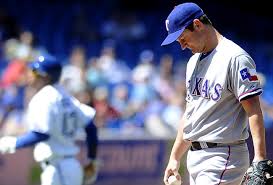 Now if you want to play for a contender, Oswalt's path is not too bad of one to do. He waited, then as the team was trying to increase their competitiveness midseason he signed with them. He wasn't all that good for them though, posting an ERA close to 6. And part of that may have been his decision to wait until midseason.
That is one of the risks of waiting, you have to have the right kind of training regiment to stay in top shape, and you basically miss out on spring training - the time when you can do awful and no one cares and none of it matters. The other risk is that you have to get teams to come and see you throw, you have to not fall into obscurity. The problem is basically you have to convince teams that you are more valuable a pick up than this or that player available at the trade deadline market, and you have no currents stats to prove that to them. So this method, has worked in the past for the likes of Oswalt or Pedro Martinez, but it possesses it's own risk, the risk of still being attractive in July.
The other option is sign with the best team you can and see how it plays out. This has its own problems. The first is one has to try to predict who will be the best option on paper. Baseball has shown over and over again that every year paper means nothing. You can usually predict teams that will be better, but it is hard to predict the best. With two wild cards I will grant that is not as important as it used to be, but plenty of teams that look good end up being mediocre. But because they meant to contend, had these big expectations, they are also usually more reluctant to trade away talent to contenders midseason unless they are really out of it. These kinds of teams, hold onto whatever playoff hope they have and for the sake of their image with fans rarely trade away players and signal they have given up. So the risk of picking the team to take you to the playoffs when you only have a year or two left in your career, is you are taking a bit of a gamble as to which team that will be, and if you pick wrong, you are likely stuck with that team midseason.
The other problem with trying to get on the team at the start of the year is that the teams that seem most likely to compete may not need another starter. Short of spending time in the minors on a minor league deal with them, you just may not get signed. Instead you turn to some of these fringe contenders or second tier winning teams that are looking for every piece to push them over the edge into division leadership. Unfortunately those teams are usually coming with much more risk.
Here is a less risky option, though you never really see this done. You use a rebuilding non-contender to showcase you for half the season, then flip you for talent midseason. The arrangement includes either a no-trade clause or a handshake agreement that you will get to approve of a team before being sent there (this means signing with the Marlins won't be an option, since the Marlins have a policy of not giving no trade clauses and I would not trust any handshake or verbal agreement offered by that front office). Hand shake agreements if you can trust them are probably better, since official no trade deals sometimes affect the player's market or the team's leverage in negotiating trades with other teams. So to have the understanding needed for this, it is better for a team. The logic is simple, on a poor team your performance will stand out. It is easier to predict teams that won't be in contention (although baseball always has its surprises on that front too) than teams that will be most likely to win the division. Because while these teams can exceed expectations, short of being really strong rebuilding clubs are hesitant to commit to a midseason run, and more likely to bow out before a trade deadline if they are fringe contenders. Teams like this are in the process of building a strong core, and care more about the future than the present because of the value of prospects to their team. By having the right to approve a trade, you can also try to narrow the field to the teams that are not only best on paper, but have been the best on the field for the first half. Nearly every team wants to improve in some way midseason when contending, and those teams that had no place for a starter in February usually have openings in July due to injuries and poor performance.
The other important thing to do is to take a deal that is not too cheap that your performance is worth keeping, but not too expensive to where some teams just cannot afford you. So you want a contract probably in the 4-8 million range. Maybe on the bottom end with performance bonuses.
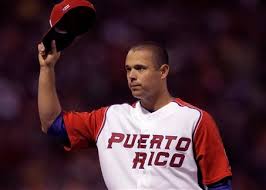 The most recent player on the "I want to still win a World Series before I call it a career" trail is Javier Vazquez, who did not pitch in 2012 but is seriously considering playing in 2013, especially for a contender (story in Spanish). To no surprise, some of the teams that have a chance but are not the favorites to contend like the Red Sox, Rays, and Royals are scouting him. The Nationals, who did win the division and make the playoffs last year are looking (and probably the best chance to win on paper among those teams). But if he wants to make the World Series, perhaps he should pass on all those teams.
 Instead I think Vazquez should consider the Astros. No team has a more grim immediate future. The Marlins are looking pretty bad too, but the difference is the Astros are now leaving the National League Central for the American League West, the division where 3 of its four teams were contenders last year, and the Mariners figure to be better this year as well having sought out offensive upgrades. It is not going to be a pretty transition. The Astros are nowhere near contention (on paper) and have essentially traded every tradeable player (except Jed Lowrie, although I'm sure in a year he'll be gone too) in order to increase their chances of having prospects that work. Vazquez would certainly stand out on this team both in talent and availability. The Astros will no doubt have room in their rotation for him. And they no doubt will be happy to trade him for whatever they can get. There is an off chance they contend, but is there a team in baseball more likely to bow out early in order to make a trade?
Now given the division they are moving to, and the fact that Minute Maid Park is more of a hitter's park, Vazquez may think it better to play for a team that is in a division or ballpark more favorable. Well then there are names like the Padres and Twins. The problem with the Padres is that any pitcher's success is immediately written off as a Petco factor (similar to hitter's success in Colorado). It may actually limit his market in scaring off a few people. And the Padres may not be as far from contention as we think, especially if guys like Headley and Grandal build off of their strong 2013 and guys like Alonso gets back on track. Another option is the Twins. The AL Central is just a weaker division and Target Field while not overly a pitcher's park will likely swing moderately in Vazquez's favor. The Twins however are not clearly rebuilding. They still have talent and contracts. They have a franchise player in Mauer, it is Morneau's last year, they have two years of Willingham. If things go right early, they are going to go for it. While their offseason wreaks of rebuilding they have not admitted it, which leaves room to try to contend should things go right (and the Twins in the last decade have had plenty of history of things going right and shocking the Central with some of their playoff runs). But they also have a history of being an awful playoff team, only getting past the division series once in the last 11 seasons, despite six playoff appearances in that span.
One more team to consider is the Mets. The Mets also are a likely non-contenders, but the team has shown it can play above their heads in the first half, but more importantly is the fact that the Mets' GM has shown an unwillingness in the past to trade away players at the deadline unless the deal is right. They did deal Beltran, they did not deal Jose Reyes. They kept Dickey and Wright in hopes of extending them, only then did they deal Dickey when it was clear that would not happen, and it still took the offseason and the waiting game for the right deal. On one hand it has been a system that netted them an impressive return in trades, but on the other it makes it harder to imagine that this is the team to sign with and then get traded to a contender midseason. Even guys like Scott Hairston who is not necessarily in the Mets' long term plans (as they let him walk and explore the market, not working hard to retain him, though they still reportedly may bring him back) was not dealt this last deadline. That attitude of reluctance to make deals unless it is definitely right, and a willingness to carry players through the season should give Vazquez pause.
The Marlins, as I said early on are just not options with this arrangement unless they will change their stance on no-trade clauses. No verbal agreement with this team is wise, and they will trade him to whoever they want to whenever they want to. No doubt playing for the Marlins is a good way to play elsewhere, but that front office does not care if you want to go to a team with a real shot at contention. If I was a free agent in baseball, I only go to Florida if I have no chance to start elsewhere (and if I intend on playing elsewhere).
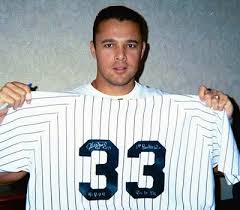 Therefore, Vazquez if he is confident he can help a contender should prove it first by helping the Astros. If he is good enough, his numbers will still stand up despite facing a tough AL West. Besides, W-L is not what most teams will be looking at, they will be looking at his peripherals like k/9, K/BB, IP, ERA, xFIP (for believers in fake stats), WAR (for believers in violent fake stats), and WHIP. If he can maintain those numbers, which I think he could if the year off did not affect him too much (he is still reportedly doing well at least velocity wise hitting 92-93mph on the radar gun) he shouldn't just resign with the Yankees again, he should go to Houston and then go on to a true contender midseason.
Whoever thought the best chance to play in the World Series might be to sign with the Houston Astros?
That is one of the risks of waiting, you have to have the right kind of training regiment to stay in top shape, and you basically miss out on spring training - the time when you can do awful and no one cares and none of it matters. The other risk is that you have to get teams to come and see you throw, you have to not fall into obscurity. The problem is basically you have to convince teams that you are more valuable a pick up than this or that player available at the trade deadline market, and you have no currents stats to prove that to them. So this method, has worked in the past for the likes of Oswalt or Pedro Martinez, but it possesses it's own risk, the risk of still being attractive in July.
The other option is sign with the best team you can and see how it plays out. This has its own problems. The first is one has to try to predict who will be the best option on paper. Baseball has shown over and over again that every year paper means nothing. You can usually predict teams that will be better, but it is hard to predict the best. With two wild cards I will grant that is not as important as it used to be, but plenty of teams that look good end up being mediocre. But because they meant to contend, had these big expectations, they are also usually more reluctant to trade away talent to contenders midseason unless they are really out of it. These kinds of teams, hold onto whatever playoff hope they have and for the sake of their image with fans rarely trade away players and signal they have given up. So the risk of picking the team to take you to the playoffs when you only have a year or two left in your career, is you are taking a bit of a gamble as to which team that will be, and if you pick wrong, you are likely stuck with that team midseason.
The other problem with trying to get on the team at the start of the year is that the teams that seem most likely to compete may not need another starter. Short of spending time in the minors on a minor league deal with them, you just may not get signed. Instead you turn to some of these fringe contenders or second tier winning teams that are looking for every piece to push them over the edge into division leadership. Unfortunately those teams are usually coming with much more risk.
Here is a less risky option, though you never really see this done. You use a rebuilding non-contender to showcase you for half the season, then flip you for talent midseason. The arrangement includes either a no-trade clause or a handshake agreement that you will get to approve of a team before being sent there (this means signing with the Marlins won't be an option, since the Marlins have a policy of not giving no trade clauses and I would not trust any handshake or verbal agreement offered by that front office). Hand shake agreements if you can trust them are probably better, since official no trade deals sometimes affect the player's market or the team's leverage in negotiating trades with other teams. So to have the understanding needed for this, it is better for a team. The logic is simple, on a poor team your performance will stand out. It is easier to predict teams that won't be in contention (although baseball always has its surprises on that front too) than teams that will be most likely to win the division. Because while these teams can exceed expectations, short of being really strong rebuilding clubs are hesitant to commit to a midseason run, and more likely to bow out before a trade deadline if they are fringe contenders. Teams like this are in the process of building a strong core, and care more about the future than the present because of the value of prospects to their team. By having the right to approve a trade, you can also try to narrow the field to the teams that are not only best on paper, but have been the best on the field for the first half. Nearly every team wants to improve in some way midseason when contending, and those teams that had no place for a starter in February usually have openings in July due to injuries and poor performance.
The other important thing to do is to take a deal that is not too cheap that your performance is worth keeping, but not too expensive to where some teams just cannot afford you. So you want a contract probably in the 4-8 million range. Maybe on the bottom end with performance bonuses.
Now given the division they are moving to, and the fact that Minute Maid Park is more of a hitter's park, Vazquez may think it better to play for a team that is in a division or ballpark more favorable. Well then there are names like the Padres and Twins. The problem with the Padres is that any pitcher's success is immediately written off as a Petco factor (similar to hitter's success in Colorado). It may actually limit his market in scaring off a few people. And the Padres may not be as far from contention as we think, especially if guys like Headley and Grandal build off of their strong 2013 and guys like Alonso gets back on track. Another option is the Twins. The AL Central is just a weaker division and Target Field while not overly a pitcher's park will likely swing moderately in Vazquez's favor. The Twins however are not clearly rebuilding. They still have talent and contracts. They have a franchise player in Mauer, it is Morneau's last year, they have two years of Willingham. If things go right early, they are going to go for it. While their offseason wreaks of rebuilding they have not admitted it, which leaves room to try to contend should things go right (and the Twins in the last decade have had plenty of history of things going right and shocking the Central with some of their playoff runs). But they also have a history of being an awful playoff team, only getting past the division series once in the last 11 seasons, despite six playoff appearances in that span.
One more team to consider is the Mets. The Mets also are a likely non-contenders, but the team has shown it can play above their heads in the first half, but more importantly is the fact that the Mets' GM has shown an unwillingness in the past to trade away players at the deadline unless the deal is right. They did deal Beltran, they did not deal Jose Reyes. They kept Dickey and Wright in hopes of extending them, only then did they deal Dickey when it was clear that would not happen, and it still took the offseason and the waiting game for the right deal. On one hand it has been a system that netted them an impressive return in trades, but on the other it makes it harder to imagine that this is the team to sign with and then get traded to a contender midseason. Even guys like Scott Hairston who is not necessarily in the Mets' long term plans (as they let him walk and explore the market, not working hard to retain him, though they still reportedly may bring him back) was not dealt this last deadline. That attitude of reluctance to make deals unless it is definitely right, and a willingness to carry players through the season should give Vazquez pause.
The Marlins, as I said early on are just not options with this arrangement unless they will change their stance on no-trade clauses. No verbal agreement with this team is wise, and they will trade him to whoever they want to whenever they want to. No doubt playing for the Marlins is a good way to play elsewhere, but that front office does not care if you want to go to a team with a real shot at contention. If I was a free agent in baseball, I only go to Florida if I have no chance to start elsewhere (and if I intend on playing elsewhere).
Whoever thought the best chance to play in the World Series might be to sign with the Houston Astros?
Monday, January 7, 2013
15 Deals that Should happen before Spring Training
As we get closer and closer to the date when pitchers and catchers report to spring training, free agent prices (which have been rather high for mediocre players this year) drop dramatically and the last big trades work themselves out as GM's try to finalize their roster for spring training. Here are 15 moves that should happen before pitchers and catchers report:
- Texas acquires Justin Upton from Arizona Diamondbacks. The rumors continue around trading Upton as Arizona's front office seems disillusioned with the player, and now after signing Cody Ross the team has an abundance of outfielders that includes Upton, Ross, Kubel, Parra, and Eaton. Kubel and Upton appear to be the most likely to be dealt and given Upton's friendly contract, MVP potential, and well rounded game he is going to fetch more, and his issues with the front office make it seem they would rather deal him. Texas has been pursuing Upton for some time, but talks had been stalled with their refusal to include young infielder Profar. But now that Arizona acquired a shortstop in the three-team trade with Cleveland and Cincinnati that no longer needs to be a hang up. Texas has two other top prospects who could fit the Diamondback's needs: either 3B Mike Olt or a pitching prospect like Perez or Scheppers. The teams match up, Arizona needs to make some kind of move with their crowded outfield, and Texas has missed out on so many big signings they paid Lance Berkman 10 million to be their DH. This is the move they have been waiting for.
- Brewers sign RHP Peter Moylan. Brewers' GM Doug Melvin has been totally reworking the bullpen this offseason, adding two good lefty relievers in Mike Gonzalez and Tom Gorzelanny. Milwaukee would do well to add a quality RHP for the pen as well and Moylan is a perfect fit. He owns a career 2.59 ERA in 7 seasons with the Braves. His issue is health, pitching only 21 games the last two seasons. But he pitched in 80 or more in 3 of the previous 4, so he could be either an injury shortened pitcher or a workhorse for the pen. It is a risk, but high reward risky players are just perfect additions to overhauling a bullpen, because they come much cheaper. And even if he pitches a shortened season, you can count it will still be of quality.
- Twins sign Jair Jurrjens. It's a wonder Jurrjens wasn't originally a Twin. He fits the bill: he doesn't get a lot of strikeouts, and yet has shown some seasons of success his peripherals cannot justify. Last season however was a disaster for him, which meant there was no way the Braves would take him to arbitration this year. But he fits the mold of Twins pitchers, has had success doing that, and is young. The Twins, while not admitting it, are rebuilding right now. They are not going to be making any big signings. But adding a young free agent like Jurrjens (still only 27) for 1 or 2 years is not a bad investment on their part, and likely could be an affordable one. Twins fans probably are tired of pitchers like him, but that hasn't stopped Minnesota from putting that kind of talent on the field. Might as well try one who has succeeded with that kind of talent, even as recently as 2011 (13 Wins, 2.96 ERA, all star appearance).
- Mariners acquire Jed Lowrie from Houston Astros. The Mariners have been trying to fix their woeful offense, while also bringing in the walls in their stadium. But they have missed out on the big offensive free agents, settling on aging bat Ibanez (it is unclear if he will be playing the field or DHing for SEA). They made a good move in acquiring Morales from the Angels. Shortstop is the ideal place for the team to upgrade offensively, and Lowrie had a strong showing in Houston last year. The Astros are so bad that they are so far from contention (especially now that they are joining the American League West) that they would listen on Lowrie, especially for pitching, which Seattle has in abundance. Lowrie is not a big enough name they could probably avoid their best pitching prospects and still make Houston a very good offer.
- Yankees resign Derek Lowe. Lowe was picked up by the Yankees after his release last season and turned in an ERA a shade over 3.00 in 17 relief appearances. While he wants to start again, he should reconsider a return to New York's pen and New York should consider him. Since the Yankees have a master plan of as many one year deals as possible this season, Lowe makes sense, since that is where he is in his career. Lowe is also a very durable pitcher, showed success in their stadium. And he can start, which is important because the Yankees have enough injury concerns that they should be equally concerning themselves with having back-up plans for the rotation. If Lowe wants to start, this may be his best shot at it. Especially if he wants to play for a winner.
- Orioles sign Dallas Braden. The Orioles stunned everyone in marvelous fashion last year by ending their long stretch of losing seasons and even making the playoffs. Without a doubt they did this with their pitching, especially their bullpen. The pen looks to be strong again this year, but Baltimore should not expect that kind of historic success that they had last year from the pen. They need to offset this with their rotation. They have some great young arms, but with young arms comes uncertainty. They should add another arm into the mix for a rotation spot. If they want to do that without trading from their system for someone, they should target a guy like Braden. Dallas Braden has had an ERA under 4 for the last three seasons. Like many of the remaining free agents, injury concerns have limited his market. But if Baltimore can get him at the right price, he is the right kind of guy to throw in the mix for a rotation spot.
- Twins sign Scott Podsednik. Trading away Revere and Span has everyone wondering who will man CF in Minnesota. I definitely think they should give a look at some of their young guys like Hicks, Mastroianni, and Benson for the job. But it would not hurt if they can add him cheap to throw Scotty Po into the mix. Podsednik is a great 4th OF guy. He can start, but is not good enough to be guaranteed a spot. He is excellent insurance for a team with question marks in CF or LF. This way if some of the young guys need more seasoning in the minors they can get it. And Podsednik is one of those guys who are real good midseason pick ups for contenders, so the Twins could even get a young low-level prospect possibly for him (no one great, but when you're rebuilding every prospect matters). And on the bench he can pinch hit or pinch run. Perfect for a team that has a big question mark in CF.
- Pirates sign Kyle Lohse. Lohse is not going to be as good as he was this year. And that is part of the problem. He wants money and years that reflects his last two seasons, but it seems I'm not the only one who questions his ability going forward. Furthermore, he lost his entire market when the Cardinals made him the "qualifying offer" necessary to make him cost a draft pick. The Pirates should capitalize on this and sign him. Pittsburgh has struggled mightily in luring free agents. This is their chance when no one else is willing to sign Lohse with draft pick compensation attached. The Pirates have a strong enough system they can afford this loss. They also failed to sign their first rounder this last year, so even if they sign Lohse, they will still have a first round pick. And they have shown the last two years that they are near contention. A stable arm would be a huge boost towards that end. Last year they reportedly offered Edwin Jackson a 3-year, 30 million dollar deal before he took his one year deal with Washington. They should make a similar offer to Lohse, maybe go as far as 3 years 36 million. It's less I'm sure than Lohse wants, but at this stage what choice does he have. Next season there may be options similar to Lohse that won't cost a draft pick, but then Pittsburgh will have a tougher job convincing those pitchers to sign. Use the leverage of a dry market to upgrade the team.
- Tigers sign Brian Wilson. The Tigers insist that they want to let their young pitcher Rondon close, but they would be smart to have a back-up plan. Unproven closers can blow up in your face and cost you a postseason, something the Tigers need to capitalize on while guys like Verlander, Fielder, and Cabrera are producing at the level they are. Wilson would be a great pick-up. coming back from injury and having regressed a bit the last two years, I'm not sure he will get a closer job, except with maybe the Marlins (but how many Free Agents want to sign there now). He should go somewhere where the closer job is not securely belonging to anyone and earn it. He could do that. If the Tigers are missing any piece, it is a quality reliever who can close. At the least he could boost this bullpen, and at most be the help this team needs to get back to the World Series.
- Royals sign Shaun Marcum. Kansas city is rolling the dice. They traded perhaps baseball's top prospect for Pitcher James Shields to headline their rotation and hopefully give the team the boost it needs to end their drought of losing and mediocrity. By doing this, the Royals have given themselves a two year window to contend. Marcum would be a great two year addition to put in that run at contention. Marcum is no ace, but he is a great second tier pitcher. He is not the top of the rotation guy, and not dependable enough to be the big acquisition, but as we saw with when he joined Greinke as additions to Milwaukee's rotation in 2011, he can really help a rotation as a secondary addition. Since the Royals are going to try to win the division, they need to do everything they can. Two years of Marcum will greatly improve their chances in that window. To make this match more perfect, Marcum is a Kansas City native. I don't see why they have not brought him home sooner.
- Mets acquire Rick Porcello from Detroit Tigers. The Mets made a hole in their rotation when they dealt Cy Young winner R.A. Dickey to Toronto. And as we have seen the last few years, the Mets have been quiet on the free agent front. Porcello seems to be the odd man out in Detroit with Anibal Sanchez returning. He is still young and controllable, so he would be an appealing piece for their team. The magic question is how much does Detroit want to trade him (and what they want in return)?
- Indians sign Jim Thome. We missed out on seeing Lance Berkman return to Houston for the end of his career. But we could still see Thome return to Cleveland. The cost is the real issue. Cleveland after signing Nick Swisher seems to be at about the limit of their budget. Thome has not cost much the last few seasons. But when guys like Berkman can get 10 million, it is hard to tell what Thome will expect. But Cleveland is one of the few teams that has a clear opening at DH. So Thome if he wants significant playing time, should make the sentimental journey back to the Indians. They have a need, and these kind of last hurrahs are just good for baseball and the fans. Even if he struggles, he'll be appreciated if he returns. But given his career, and his ability to still get on base and hit big home runs, he's still likely to give them some quality production.
- Yankees sign Brandon Inge. This deal would make so much sense for the Yankees, because they could use a righty bat. Inge is a versatile fielder, with experience at catcher, 3B, and OF. Coincidentally the Yankees have only lefty hitting outfielders, hope that Kevin Youkilis will return to form at 3B, and have an unproven tandem at C. Inge is particularly dangerous against LHP, a tool the Yankees could use. Given his versatility and their need for a righty bat, the Yankees should have no trouble finding him AB's. And he can hardly expect more than a one year deal (maybe even a minor league deal), which should definitely be to the Yankee's liking.
- Phillies sign Scott Hairston. The Phillies are supposedly still looking for outfield help, and a good righty bat for outfield makes the most sense. They haven't had a good righty bat since Jason Worth left. Hairston is not as good as Worth to be sure, but would give them another bat in the mix, to either play a corner or platoon with someone. He showed this year he can bring some thump, particularly against LHP (.550 slugging 2012). He'd be great to mix into their OF. And if he can hit 20 home runs in the Mets' stadium, just think of what he could do in the Phillies' homer friendly park!
- Athletics signs Aledmys Diaz. Funny enough, this would be the second international free agent shortstop Oakland would sign this offseason were they to do this. Earlier in the offseason Oakland signed Japanese shortstop Hiroyuki Nakajima who will be their immediate shortstop. But Japanese shortstops have been no sure thing in the US. It is unclear how he will perform. Therefore the A's should already have another option in place should he fail or simply for when he reaches the end of his contract. And that option should be the 23 year old Cuban shortstop. Young Cuban players draw a lot of interest, but Oakland won out on Cespedes last year which turned out to be a good move, so I suspect given the uncertainty long term at the position and their recent success with Cuban free agents they will make a push for him. And they should.
Sunday, December 30, 2012
Armchair Book Review - "Even Death"
Hope all my readers had a great Christmas. Christ the Savior is born!
 Among my gifts this year was the book Even Death by Wade Johnston. The book is published by Magdeburg Press and can be found at their website. I took some of my down time while out with my family to read the book, and after finishing it decided this book needed a little free publicity courtesy of me. I rarely dig into religious fiction, usually because the theology will at some point frustrate me too much. And Lutherans don't regularly show up in main stream publications of novels, so ya have to find more obscure books from more obscure publishers like this one. I actually came upon it and added it to my Christmas list when I was looking at Magdeburg's newest book which I also received for Christmas, Then Fell the Lord's Fire by Bo Giertz. Another fantastic book with fantastic essays and sermons from Giertz (focused particularly on the office of ministry). But if there is a such thing as a Giertzian Lutheran, I am one of them, so of course it is wonderful.
Back to Johnston's novel. The book's synopsis is listed on the publisher's website, but I'll offer my own as well here for those too lazy or more curious after reading the publisher's offering, but I'll do my best to avoid any real spoilers. The premise of the story is four Lutheran pastors from America who were college buddies do a bit of a reunion vacation and tour historically significant sites in Germany. Four terrorists hailing from I believe it is three Middle Eastern nations (Lebanon, Palestine, and Iraq) learn of the pastors' trip and plan to kidnap them and make them profess Allah as the true God and Muhammad as his true prophet (a confession known as the Shahada). The book also follows the authorities, led by two GSG 9 Agents, as they try to track down and stop the terrorists.
For those wondering, since Lutherans are oft inclined to ask, the book never specifies what flavor of Lutheranism the pastors are. However, based on the publisher, the strong German heritage of the pastors involved, and various hints from within the book it suggests a more "conservative" synod, likely Missouri or Wisconsin. My favorite quote supporting this theory is, "We're confessional Lutherans, not the kumbaya kind." Now while many ELCA pastors like myself consider ourselves confessional, the comparison is the key. Even those who consider themselves of a "confessional" brand while ELCA one would then have to wonder who the "kumbaya kind" is referring to. While it could be an internal comparison (I myself know some "kumbaya kinds") here it seems to be an synodical comparison, and if the ELCA is not the Kubmaya kind I'm not sure who would be. But that is about as close as the book comes to identifying the synod (through the liturgy presented one could perhaps come to a firmer answer), and as an ELCAer I can say it plays no real role. The book is certainly good and accessible for all Lutherans, in theology and presentation. There is room for this book for non-Lutherans too, not overutilizing Lutheran tribal language outside perhaps the beginning when they are touring these historical Lutheran sites, and so Lutheran history is mentioned. But theologically speaking, while it certainly comes from a Lutheran perspective, it is presented in a manner that will be acceptable to many other groups, especially those closer to Lutheranism in theology or practice.
While not overly theological, that is, it is still a story and is not concerned with theological reflection in every scene or chapter, it still has tons of theology expressed. For those looking for that either simply because like me they enjoy it or one is considering this for a church book group the book has it. I mean so much could be taken alone from my favorite quote in the book, "I wasn't baptized; I am baptized." Along with presenting the theme of faith under persecution the book has many small theological pieces that find their way in here or there including baptism, confirmation, the divine service, prayer and psalms, using the catechism, theology of the cross, and ultimately (as the title indicates) even death. The issues are deep and serious, it takes a very real and honest look, not using theology in some simple fix but engaging the complex reality the characters find themselves in. Quite appreciatively also is that the theology is not simply playing a role in the story of the pastors, but the surrounding characters, including the Muslim and non-believing ones.
As a piece of literature, the story was good. I got the book on Christmas night (Tuesday) and finished it Thursday night/early Friday morning. It held my attention, and was a relatively quick and easy read (coming from someone who does not reckon himself a fast reader by any measure). The author pulls off a very difficult style of 3rd person narration. For those wondering, 3rd person narration does not necessarily come in a single form. It can be 3rd person but really only follow the main character and everything still essentilaly comes from that character's perspective (the Harry Potter series is almost entirely done this way, never telling us something Harry does not know, and only in about four or five chapters in the entire series presenting a scene that Harry himself does not witness), there are styles that are more omniscient and Even Death employs one of them, this one while omniscient will often through a scene focus primarily on a single character, but it jumps from scene to scene as to which character the narration is focusing on. This style is more difficult but I think very important for this book. I think one or two characters are a bit too type cast and the author fails to deliver on presenting them, but for the most part was able to bring each character to life. This was most important perhaps in bringing the book's villains to life. We learn that the terrorists are acting for different reasons and learn a bit of the path and events that lead them to where they are. They also have different motives and faiths, while the entire act is under a radical Islamic group, it is helpful to see even the diversity in their goals, faith, and intentions. This style served the story well, which is an interesting story. Like I said, it is not just a theology book, it is a piece of fiction. It has action and a lot of building up towards what is to come next. Perhaps a bit too much foreshadowing at a few moments, but in general the book is driving one to wonder what will happen and how will the investigation unfold. For those who read with a faith background, the issue of persecution will add a personal layer as the very real scenario the book plays out will likely cause those with invested faiths to ask how they would react in that situation. This will be especially true for those who are willing to not let the "right" ideal answer stand as a facade to the very deep and real issue presented and really willing to ask it not rhetorically or as though scripted, but genuinely with an honest fear that the "If" this scenario presents could make one wrestle.
If the book fails on any level, it will be in two ways: the first is that it desperately needs an editor. I'm not sure if Magdeburg being a smaller publisher has no editor or needs to fire their editor, but the quality of simply proofreading was very poor, especially towards the end of the book which is the last place one wants one's reading to be hindered or interrupted by spelling, punctuation, or grammatical errors. We all make mistakes. I regularly find them in my own blog and have to fix them, but this is not a published material, and you are not paying to read my blog. If you are one who is overly bothered and cannot get over mistakes in published material, this book is not for you. If you are like me and can get past that, frustrating as it is, read it. The other way the book will fail will likely be how one expects the book to end when reading it. If one has a strong opinion about it ending one way or another for whatever reason, the ending might be an issue or just what you were looking for. I won't say more so as to not spoil things, but those who read will perhaps know to what I am alluding to. But as the novel went on I asked myself how I would feel if the book ended this way or that, and particularly theologically I really had to think about it. It is also worth noting that because the story is following various characters it jumps a lot, and so if one is not good at following when books do that (although it at least capitalizes the first line of the new scene to indicate the transition) or do not like books that do that frequently, again this may not be the book for you.
I think the book is quick and easy enough of a read to be a good educational tool, but one must think hard about what context would be appropriate. The book is quite graphic at points and for the most part has a very real feel to it. It's a shame that I think it is probably a bit too serious a book for confirmation because there is a particular moment in the book that draws directly on confirmation, one that might be good for discussion with confirmands as they approach their own confirmation. Perhaps with the right group of kids one could do that, but I am not sure I am comfortable in general making that recommendation. Perhaps I underestimate our young people. I definitely think young adult or adult groups could handle this book and benefit from it. Those familiar with the book Silence by Shusaku Endo may understand the benefits that can come from fruitful discussions on this struggle of public apostasy and suffering. Where Even Death does Silence one better is that it is a contemporary situation in the Western world, making I believe more real the struggle. Great group discussions could be had, so long as there is a leader ready to ask the right questions, or someone in the group willing to share how the book challenged them, disturbed them, or preached to them.
For those who love theology and church history (especially of the Lutheran brand) this book is for you. It has enough to get the theological folks excited, but it also has a solid story for the more recreational readers grounded in our contemporary world and perhaps in our contemporary fears. It brings what we hear about happening to people of faith in the non-Western world into the Western world. It happens in Germany. It happens to Americans. It happens to pastors. The book while clearly Christian does well to not simply attack the Islamic religion or make Christianity "win", instead of it being about winning or losing, or who has the better God, the very absurdity of the Christian faith is put out there. It is no crusade against Islam, but perhaps to some degree is a sermon illustration on theology of the cross. Or at least I imagine that was the author's intention.
In short: It had plenty for me to reflect on, a story and Lutheran geekiness that I could enjoy, and in general I would recommend it.

Back to Johnston's novel. The book's synopsis is listed on the publisher's website, but I'll offer my own as well here for those too lazy or more curious after reading the publisher's offering, but I'll do my best to avoid any real spoilers. The premise of the story is four Lutheran pastors from America who were college buddies do a bit of a reunion vacation and tour historically significant sites in Germany. Four terrorists hailing from I believe it is three Middle Eastern nations (Lebanon, Palestine, and Iraq) learn of the pastors' trip and plan to kidnap them and make them profess Allah as the true God and Muhammad as his true prophet (a confession known as the Shahada). The book also follows the authorities, led by two GSG 9 Agents, as they try to track down and stop the terrorists.
For those wondering, since Lutherans are oft inclined to ask, the book never specifies what flavor of Lutheranism the pastors are. However, based on the publisher, the strong German heritage of the pastors involved, and various hints from within the book it suggests a more "conservative" synod, likely Missouri or Wisconsin. My favorite quote supporting this theory is, "We're confessional Lutherans, not the kumbaya kind." Now while many ELCA pastors like myself consider ourselves confessional, the comparison is the key. Even those who consider themselves of a "confessional" brand while ELCA one would then have to wonder who the "kumbaya kind" is referring to. While it could be an internal comparison (I myself know some "kumbaya kinds") here it seems to be an synodical comparison, and if the ELCA is not the Kubmaya kind I'm not sure who would be. But that is about as close as the book comes to identifying the synod (through the liturgy presented one could perhaps come to a firmer answer), and as an ELCAer I can say it plays no real role. The book is certainly good and accessible for all Lutherans, in theology and presentation. There is room for this book for non-Lutherans too, not overutilizing Lutheran tribal language outside perhaps the beginning when they are touring these historical Lutheran sites, and so Lutheran history is mentioned. But theologically speaking, while it certainly comes from a Lutheran perspective, it is presented in a manner that will be acceptable to many other groups, especially those closer to Lutheranism in theology or practice.
While not overly theological, that is, it is still a story and is not concerned with theological reflection in every scene or chapter, it still has tons of theology expressed. For those looking for that either simply because like me they enjoy it or one is considering this for a church book group the book has it. I mean so much could be taken alone from my favorite quote in the book, "I wasn't baptized; I am baptized." Along with presenting the theme of faith under persecution the book has many small theological pieces that find their way in here or there including baptism, confirmation, the divine service, prayer and psalms, using the catechism, theology of the cross, and ultimately (as the title indicates) even death. The issues are deep and serious, it takes a very real and honest look, not using theology in some simple fix but engaging the complex reality the characters find themselves in. Quite appreciatively also is that the theology is not simply playing a role in the story of the pastors, but the surrounding characters, including the Muslim and non-believing ones.
As a piece of literature, the story was good. I got the book on Christmas night (Tuesday) and finished it Thursday night/early Friday morning. It held my attention, and was a relatively quick and easy read (coming from someone who does not reckon himself a fast reader by any measure). The author pulls off a very difficult style of 3rd person narration. For those wondering, 3rd person narration does not necessarily come in a single form. It can be 3rd person but really only follow the main character and everything still essentilaly comes from that character's perspective (the Harry Potter series is almost entirely done this way, never telling us something Harry does not know, and only in about four or five chapters in the entire series presenting a scene that Harry himself does not witness), there are styles that are more omniscient and Even Death employs one of them, this one while omniscient will often through a scene focus primarily on a single character, but it jumps from scene to scene as to which character the narration is focusing on. This style is more difficult but I think very important for this book. I think one or two characters are a bit too type cast and the author fails to deliver on presenting them, but for the most part was able to bring each character to life. This was most important perhaps in bringing the book's villains to life. We learn that the terrorists are acting for different reasons and learn a bit of the path and events that lead them to where they are. They also have different motives and faiths, while the entire act is under a radical Islamic group, it is helpful to see even the diversity in their goals, faith, and intentions. This style served the story well, which is an interesting story. Like I said, it is not just a theology book, it is a piece of fiction. It has action and a lot of building up towards what is to come next. Perhaps a bit too much foreshadowing at a few moments, but in general the book is driving one to wonder what will happen and how will the investigation unfold. For those who read with a faith background, the issue of persecution will add a personal layer as the very real scenario the book plays out will likely cause those with invested faiths to ask how they would react in that situation. This will be especially true for those who are willing to not let the "right" ideal answer stand as a facade to the very deep and real issue presented and really willing to ask it not rhetorically or as though scripted, but genuinely with an honest fear that the "If" this scenario presents could make one wrestle.
If the book fails on any level, it will be in two ways: the first is that it desperately needs an editor. I'm not sure if Magdeburg being a smaller publisher has no editor or needs to fire their editor, but the quality of simply proofreading was very poor, especially towards the end of the book which is the last place one wants one's reading to be hindered or interrupted by spelling, punctuation, or grammatical errors. We all make mistakes. I regularly find them in my own blog and have to fix them, but this is not a published material, and you are not paying to read my blog. If you are one who is overly bothered and cannot get over mistakes in published material, this book is not for you. If you are like me and can get past that, frustrating as it is, read it. The other way the book will fail will likely be how one expects the book to end when reading it. If one has a strong opinion about it ending one way or another for whatever reason, the ending might be an issue or just what you were looking for. I won't say more so as to not spoil things, but those who read will perhaps know to what I am alluding to. But as the novel went on I asked myself how I would feel if the book ended this way or that, and particularly theologically I really had to think about it. It is also worth noting that because the story is following various characters it jumps a lot, and so if one is not good at following when books do that (although it at least capitalizes the first line of the new scene to indicate the transition) or do not like books that do that frequently, again this may not be the book for you.
I think the book is quick and easy enough of a read to be a good educational tool, but one must think hard about what context would be appropriate. The book is quite graphic at points and for the most part has a very real feel to it. It's a shame that I think it is probably a bit too serious a book for confirmation because there is a particular moment in the book that draws directly on confirmation, one that might be good for discussion with confirmands as they approach their own confirmation. Perhaps with the right group of kids one could do that, but I am not sure I am comfortable in general making that recommendation. Perhaps I underestimate our young people. I definitely think young adult or adult groups could handle this book and benefit from it. Those familiar with the book Silence by Shusaku Endo may understand the benefits that can come from fruitful discussions on this struggle of public apostasy and suffering. Where Even Death does Silence one better is that it is a contemporary situation in the Western world, making I believe more real the struggle. Great group discussions could be had, so long as there is a leader ready to ask the right questions, or someone in the group willing to share how the book challenged them, disturbed them, or preached to them.
For those who love theology and church history (especially of the Lutheran brand) this book is for you. It has enough to get the theological folks excited, but it also has a solid story for the more recreational readers grounded in our contemporary world and perhaps in our contemporary fears. It brings what we hear about happening to people of faith in the non-Western world into the Western world. It happens in Germany. It happens to Americans. It happens to pastors. The book while clearly Christian does well to not simply attack the Islamic religion or make Christianity "win", instead of it being about winning or losing, or who has the better God, the very absurdity of the Christian faith is put out there. It is no crusade against Islam, but perhaps to some degree is a sermon illustration on theology of the cross. Or at least I imagine that was the author's intention.
In short: It had plenty for me to reflect on, a story and Lutheran geekiness that I could enjoy, and in general I would recommend it.
Wednesday, December 19, 2012
Man of Steel Trailer Reactions
Growing up in the age of Superhero movies, I've seen tons of approaches to characters, interestingly enough I have found the ones who were relatively unimpressive in the comics (Iron Man for example) have made great movies. Maybe because the writers have more room to adapt and work with the story and character to make him fit into a good movie.
But it is far harder to do that with Superman. His story and character has been iconic. It's really because of him we have comic book super heroes. Now over the years Superman has been done and redone in a myriad of ways, particularly in the DC Universe. Some are good, some are not. And with my loyal devotion to the character, I am very nervous as to how it will be. For one, I am very concerned about Christopher Nolan who has done a radically dark Batman. It makes sense since Batman is a dark hero character, and the psychology of it he knows how to use to get under the viewer's skin. Nolan also knows how to put a good cast around a hero - and in that respect, Man of Steel at first glace appears to reflect that. But one must be very careful in how much Superman is a head game overly-conflicted character, a dark atmosphere, or ultimately rebellious/questionable in integrity. These things, even if they are what makes many modern Superhero movies successful to young fans, in no way fit the mold of the character.
I also am very concerned about Henry Cavill as Superman. It sounds silly, but the way they worked his hair in screen shots like this one just kills the look, and his upper body does not fit the mold, that is, something about it doesn't work with his outfit. He has the superman chin, I'll give him that. But from all the screen shots I've seen he lacks the iconic image. Truth be told, when Warner decided to not do Man of Steel as a continuation of Singer's Superman Returns (which prior to the studio cutting Singer from the project that was the same title his next movie was going to use) they lost a great asset in Brandon Routh. I initially loved Routh for the same reason I was very much in favor of Singer's Superman movie, it respected and really felt a part of the Donner/Reeve Superman series. Routh was an amazing Superman in part because he adequately in looks and demeanor pulled off playing a great superhero and the actor who played that same character before him. He did not just look like Superman, he looked like the big screen Superman. My greatest fear when Superman returned to screen was if it would be true or would end up being too radical. Singer may not have understood what many modern fans wanted in terms of hero action-movie genre, but he understood the character of Superman and how the iconic Reeve films had essentially paralyzed any efforts to do something different. The truth is, this Superman reboot, which I expect to be very popular in the box office, likely will owe much of its success to Singer's film. Even the great number of people critical to the film needed it to really move on. Until Superman Returns they were still trying to be free from the great hurdle of the original Superman movie. So while Singer's film did not do what many may have hoped in the box office (although it still made a pretty penny worldwide), it finally allowed people to do a reboot without the reboot being the way Superman is brought back to films. Superman Returns handled the nostalgia.
We won't know until the movie comes out how much this plays in the plot, or how much this deviates from the original story and ultimately affects how they present the character, but the trailer in several parts indicates that Jonathan Kent does not want Clark to use his powers, at least not publicly. Kevin Costner I expect will execute that role wonderfully. What I like about that premise is not so much the story impact but the parental aspect. That is, usually the Kents' role in the series has been the great instillers of midwestern farmer morals that shape this man's powers into something to be used for good. They are good parents in that they raise him well. But what is missing from that is the parental concern for their child, that is I think expressed well in a father not wanting anyone to know about Clark lest the world treat him as a freak or the Government experiment on him or persecute him. Given it's place in the trailer and the shots of Superman in cuffs with an armed escort, you get the notion that it will play a bigger place in the story.
In general it is very clear that this next movie will be a reboot, and will take liberties to break away from past Superman screen portrayals. It definitely has potential to be good. But I am weary of how the character development in the story will jive with my understanding of Superman, and while there are some great and surprising casting choices I think for the likes of Lois Lane, the Kents, Jor-El, and Perry White it remains to be seen how our hero and villain will fare in their roles. I am particularly concerned with Cavill's character. He could surprise me, but the first impression disappointed me. Although it won't just be his fault if it is bad, we can already see from the trailer that personal struggle with being a hero and coming out as Superman will be particular features in the film, and that could be done in a way that would totally upset those who see Superman as an iconic character not just in image but in qualities.
Saturday, December 15, 2012
Luke 3 Remix in light of shootings
Because yesterday's shooting is on the mind of many as they approach worship this Sunday, I thought I would take a quick venture back into the Luke reading in light of the shooting. My previous blog on the text can be found here. The reading for Sunday can be found here.
I immediately here turn to John's advice on how the various people should live. I turn there because now we see both the importance and the limitation of such advice. We see its importance because we see that the world needs more compassion, it needs more care for each other not damage of each other. The life we are called to live should not, must not look like this. John and Jesus alike both call forth a different kind of living. God's law calls for a different kind of living.
The limitation that such teaching has also comes forth, because we can see how philosophy or teaching or even law does not save us. It does not remove sin or ultimately prevent terrible things from happening. No matter how strict, the law will be broken. But this is precisely the reality Christ is coming to save us from. As I said in my original post on this reading, were it ultimately up to how we change, it looks quite grim. Perhaps that is one of the reasons the nation looks on in shock, it destroys any claim that we have progressed beyond such a history. It means we still need a Savior. Of course that is not the only or even the main reason we are sad and rattled, but it certainly is an unspoken proclamation into our hearts.
And he is coming. One who will baptize with the Holy Spirit. As I thought about yesterday's violence, I thought about baptism. I thanked God that it was not just for adults. Whatever people think about decision theology, making decisions for Christ, or using baptism to show your commitment to God, yesterday we saw that children need promises of a Savior too. They need rescue from this world and death itself as well. They need the promise of baptism that they will rise to new life with Christ. All discussions on original sin aside (although I'm convinced by both scripture and experience that we are indeed born in sin) the last enemy to be defeated is death, and baptism has a powerful place in how it ties us to that victory. The declaration that Christ is coming with such a baptism is the greatest message to the ears of us fragile mortal souls. He comes and looses upon society this baptism. Some do it with no real knowledge or commitment, some ignore it completely these days, but when such tragedy strikes there is no promise greater than the promise of one baptism, it removes doubt of what God does for our children. It was spoken, it was done. Luther regularly would lift up how in baptism we have an event, a physical and oral event that all the senses and the records of history could definitively declare that these sacred promises have been given to us without a doubt. We could feel and hold on to the word as we do the water. There is no greater thing than to be able to firmly and without doubt declare God's election of a child, especially when we must bury that child. This was the wonder of Christ's coming, that all he was about to do, it could be summed up in the baptism he brings, because it could be given in the baptism he brings.
 Society is starting to get lax on baptism, as the church falls more into obscurity. Parents are deciding to wait and let their children decide for themselves. Families are asking less "will you baptize your baby?" Even pastors are becoming in some circles more lax, trying to find excuses at times to tone down the necessity or importance of baptism. But at times like yesterday, there is no promise we cling to more than the firm promises of baptism, for the justifying faith and the outpouring cross are so intimately connected there. Baptism lets us use the cross to sustain faith in a personal way. Even when people are battling with how to interpret someone's belief or lack thereof there is no interpretation in baptism. And so part of the message of John is Christ is coming, and coming with the unbelievable gift of baptism. A gift given for the most basic of days and the most tragic of days.
The final thought is the expectation of the people. The people were wondering if John was the messiah. We can hear joy and hope in those words, but we can equally hear a desperation. As people are sometime eagerly and other times desperately longing for the messiah, right now some are doing so desperately. We look at this mess and ruin, and with utter shock look about for help. "Are you the one?" Who can offer comfort to such a tearful day? "I lift up my eyes to the hills, from where does my help come?" And as the Psalmist continues, "My help is in the Lord, the maker of heaven and earth." Past liturgies (and still in some churches today) in the opening part of the service the question would come "From where does your help come?" And the people would reply "Our help is in the name of the Lord who made heaven and the earth." And so as we lift up our eyes, wondering where is our help, wondering who can rescue us from this body of death, looking wherever there may be a glimmer of hope in hopelessness, John says not I, but he. John turned the people's attention towards the One who came, who baptizes with the Holy Spirit. As our hearts ache and long for One to turn to amid ongoing tragedy, trauma, and grief - may he point us likewise to Jesus. And the baptism he brings.
I immediately here turn to John's advice on how the various people should live. I turn there because now we see both the importance and the limitation of such advice. We see its importance because we see that the world needs more compassion, it needs more care for each other not damage of each other. The life we are called to live should not, must not look like this. John and Jesus alike both call forth a different kind of living. God's law calls for a different kind of living.
The limitation that such teaching has also comes forth, because we can see how philosophy or teaching or even law does not save us. It does not remove sin or ultimately prevent terrible things from happening. No matter how strict, the law will be broken. But this is precisely the reality Christ is coming to save us from. As I said in my original post on this reading, were it ultimately up to how we change, it looks quite grim. Perhaps that is one of the reasons the nation looks on in shock, it destroys any claim that we have progressed beyond such a history. It means we still need a Savior. Of course that is not the only or even the main reason we are sad and rattled, but it certainly is an unspoken proclamation into our hearts.
And he is coming. One who will baptize with the Holy Spirit. As I thought about yesterday's violence, I thought about baptism. I thanked God that it was not just for adults. Whatever people think about decision theology, making decisions for Christ, or using baptism to show your commitment to God, yesterday we saw that children need promises of a Savior too. They need rescue from this world and death itself as well. They need the promise of baptism that they will rise to new life with Christ. All discussions on original sin aside (although I'm convinced by both scripture and experience that we are indeed born in sin) the last enemy to be defeated is death, and baptism has a powerful place in how it ties us to that victory. The declaration that Christ is coming with such a baptism is the greatest message to the ears of us fragile mortal souls. He comes and looses upon society this baptism. Some do it with no real knowledge or commitment, some ignore it completely these days, but when such tragedy strikes there is no promise greater than the promise of one baptism, it removes doubt of what God does for our children. It was spoken, it was done. Luther regularly would lift up how in baptism we have an event, a physical and oral event that all the senses and the records of history could definitively declare that these sacred promises have been given to us without a doubt. We could feel and hold on to the word as we do the water. There is no greater thing than to be able to firmly and without doubt declare God's election of a child, especially when we must bury that child. This was the wonder of Christ's coming, that all he was about to do, it could be summed up in the baptism he brings, because it could be given in the baptism he brings.
The final thought is the expectation of the people. The people were wondering if John was the messiah. We can hear joy and hope in those words, but we can equally hear a desperation. As people are sometime eagerly and other times desperately longing for the messiah, right now some are doing so desperately. We look at this mess and ruin, and with utter shock look about for help. "Are you the one?" Who can offer comfort to such a tearful day? "I lift up my eyes to the hills, from where does my help come?" And as the Psalmist continues, "My help is in the Lord, the maker of heaven and earth." Past liturgies (and still in some churches today) in the opening part of the service the question would come "From where does your help come?" And the people would reply "Our help is in the name of the Lord who made heaven and the earth." And so as we lift up our eyes, wondering where is our help, wondering who can rescue us from this body of death, looking wherever there may be a glimmer of hope in hopelessness, John says not I, but he. John turned the people's attention towards the One who came, who baptizes with the Holy Spirit. As our hearts ache and long for One to turn to amid ongoing tragedy, trauma, and grief - may he point us likewise to Jesus. And the baptism he brings.
Subscribe to:
Posts (Atom)